Masters India
Masters India
Products
Tools
Resources
Company

Chapter 3: Inspection of Goods in Movement (Section 68)

Inspection of Goods in Movement (Section 68)

Authority to Intercept and Inspect Conveyances
Authority to Intercept and Inspect Conveyances

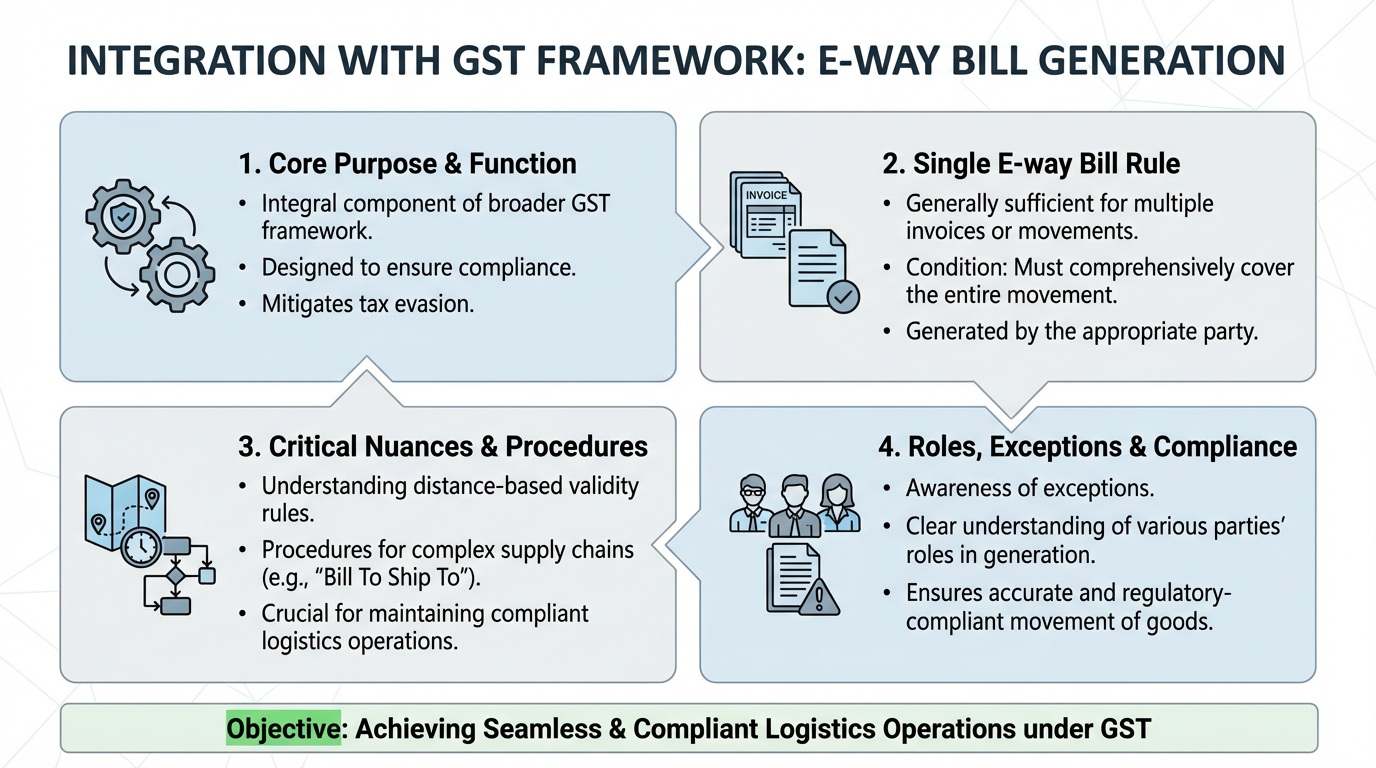
Section 68 of the Central Goods and Services Tax (CGST) Act grants proper officers the authority to inspect goods during transit. This provision is vital for ensuring adherence to GST regulations, preventing tax evasion, and facilitating the efficient movement of goods nationwide. The Government is empowered to mandate that individuals responsible for conveyances transporting consignments exceeding a specified value carry particular prescribed documents and devices.

Upon intercepting a conveyance, a proper officer can:

Demand the production of prescribed documents and devices for verification.

Inspect the goods being transported.

Verify compliance with GST laws, including proper accounting of goods, correct tax payment, and documentation.

Detain goods if violations are suspected, which can lead to penalties, confiscation of goods, or even the conveyance itself.
Requirement for Prescribed Documents and Devices

Requirement for Prescribed Documents and Devices

Section 68(1) stipulates that the Government may require the person in charge of a conveyance carrying goods above a specified value to carry specific documents and devices. The details of these requirements and their validation are prescribed by rules. The most significant prescribed document and device for goods movement under GST is the e-way bill.

The E-way Bill

The E-way Bill

An e-way bill is an electronic document mandatory for the inter-state and intra-state movement of goods exceeding a specified value, currently ₹50,000. It serves as a critical tool for tracking goods movement and curbing tax evasion.

Generation of E-way Bills

Generation of E-way Bills

The responsibility for generating an e-way bill varies based on the circumstances:

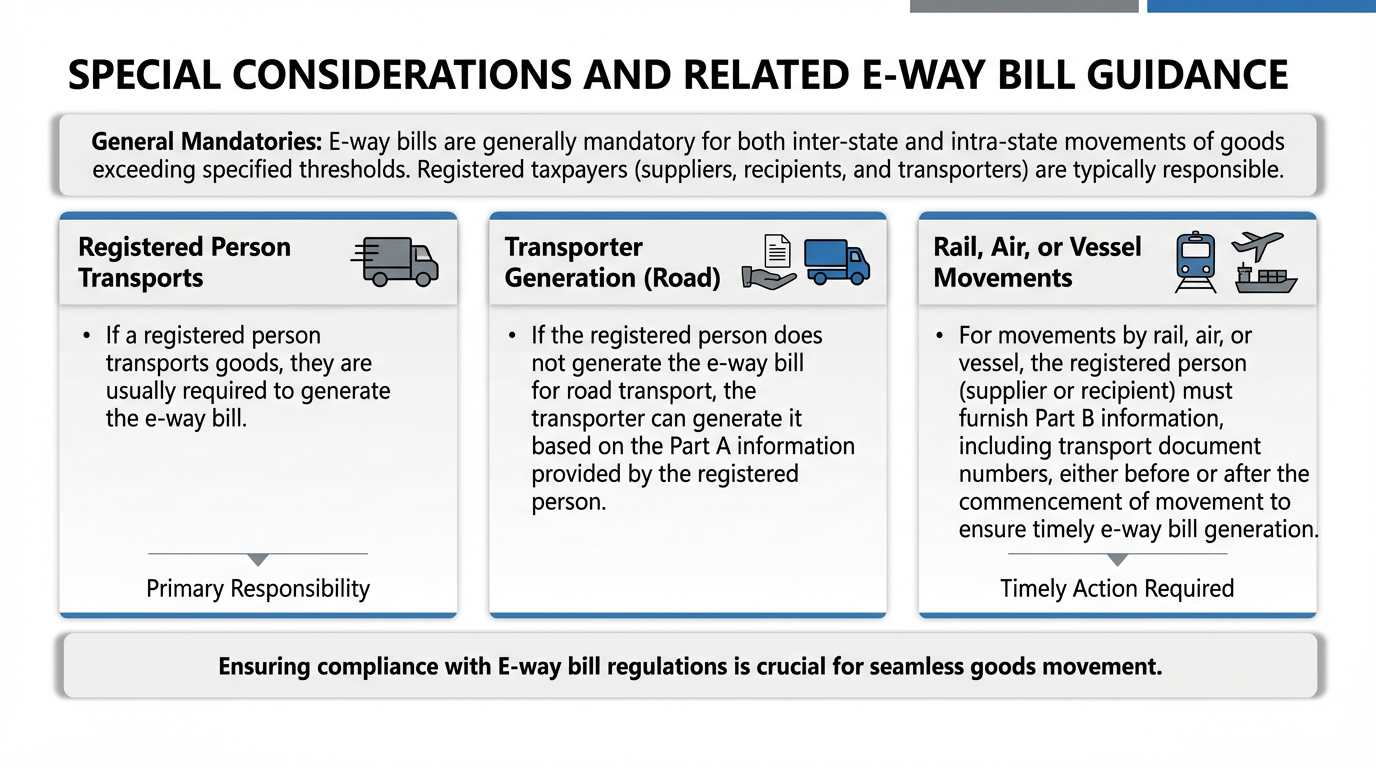
Registered Persons (Consignor or Recipient): When goods are transported by road using the consignor’s, recipient’s, hired, or public conveyance, the registered person (consignor or recipient) must generate the e-way bill by furnishing information in Part B on the common portal.

Transporters: If a registered person hands over goods to a transporter for road transport and fails to generate an e-way bill, the transporter becomes responsible. The registered person must provide the transporter’s details in Part B, enabling the transporter to generate the e-way bill.

Movement by Railways, Air, or Vessel: For transport modes other than road, the registered person (supplier or recipient) must generate the e-way bill. They need to furnish information in Part B, including the transport document number (e.g., Goods Receipt Number, Railway Receipt Number, Airway Bill Number, or Bill of Lading Number), either before or after the commencement of movement.

When an E-way Bill is Required

When an E-way Bill is Required

An e-way bill is generally required in the following scenarios:

Inter-State Movement: For all inter-state movement of goods where the consignment value exceeds ₹50,000.

Intra-State Movement: For intra-state movement of goods where the consignment value exceeds ₹50,000, as notified by respective State Governments.

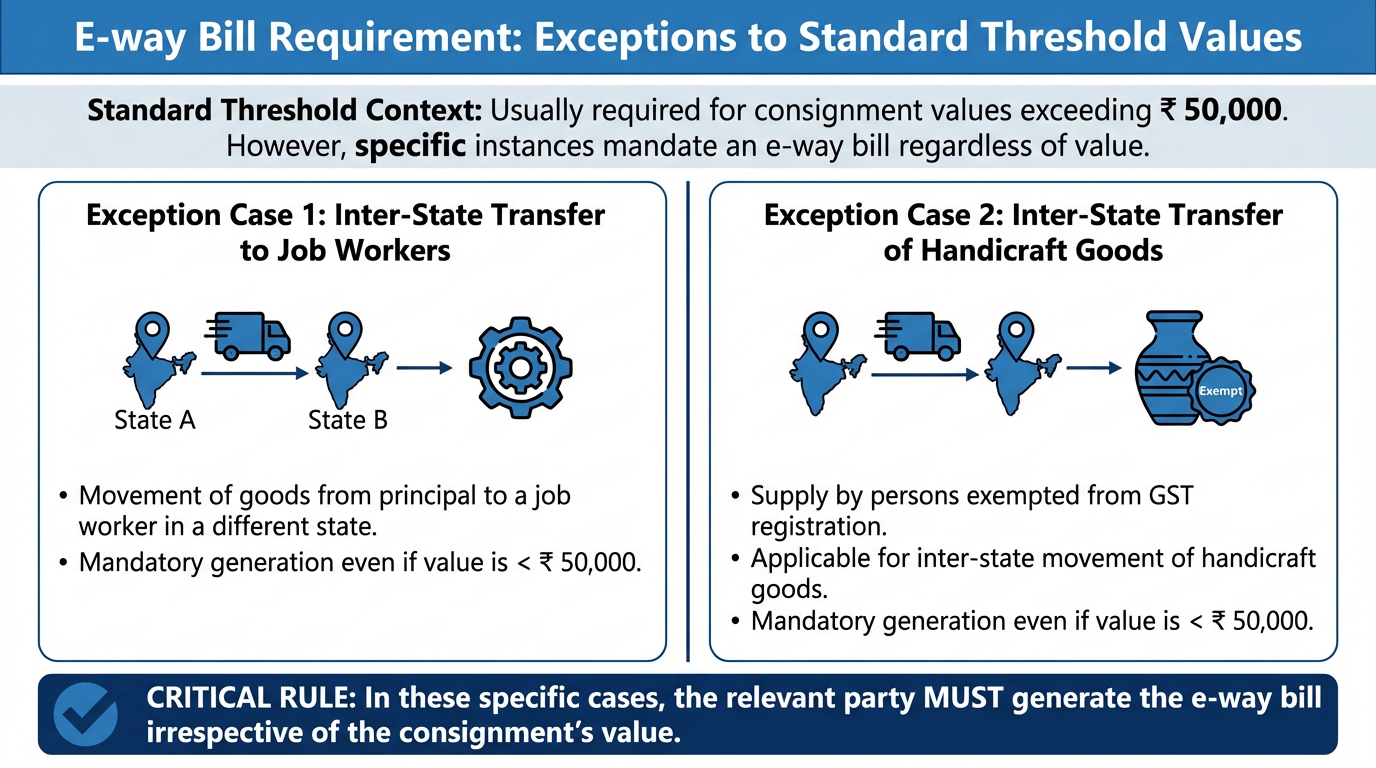
Special Situations (Irrespective of Value):

Inter-State Transfer to Job Worker: When goods are sent by a principal to a job worker in another State or Union Territory, the principal or registered job worker must generate the e-way bill, regardless of the consignment’s value.

Inter-State Transfer of Handicraft Goods: For inter-state movement of handicraft goods by a person exempted from registration, that person must generate the e-way bill, irrespective of the consignment’s value.

E-way Bill in “Bill To Ship To” Model

E-way Bill in “Bill To Ship To” Model

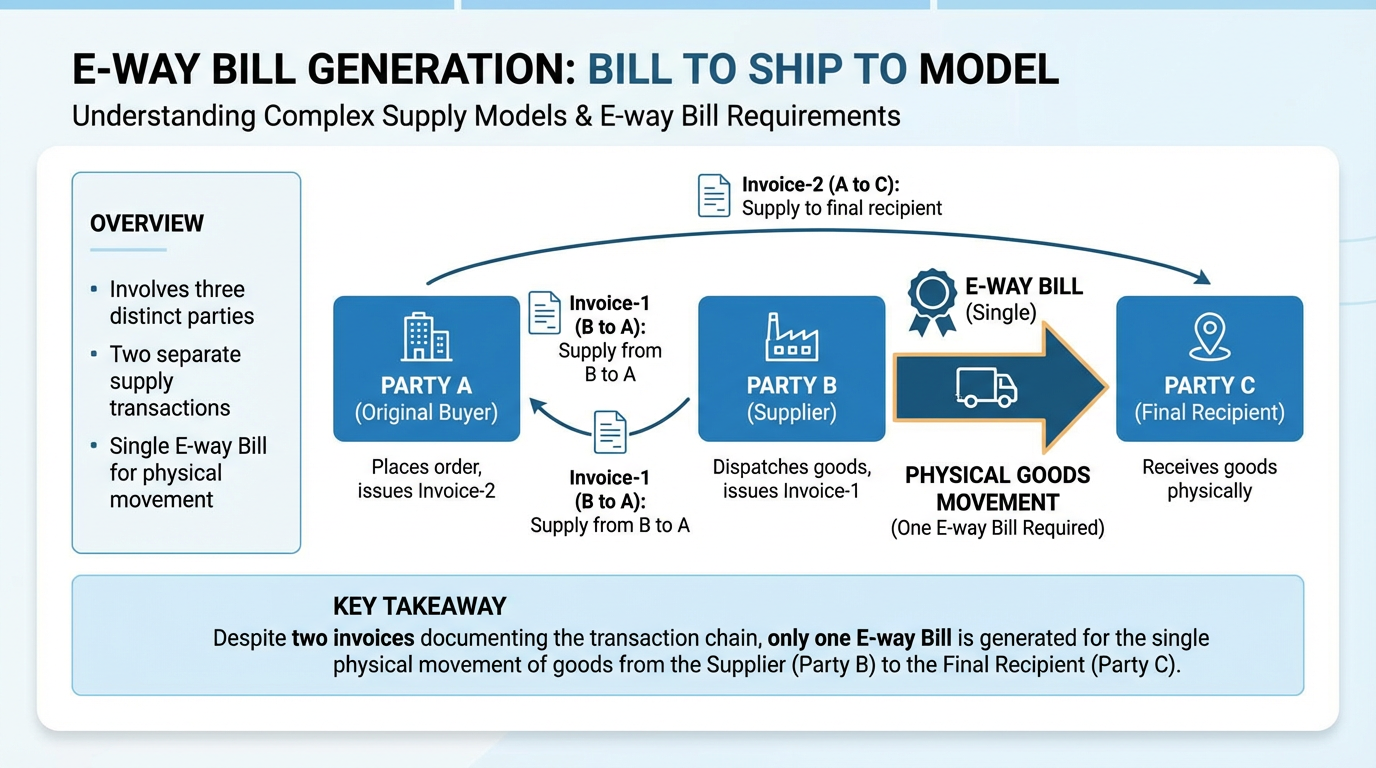
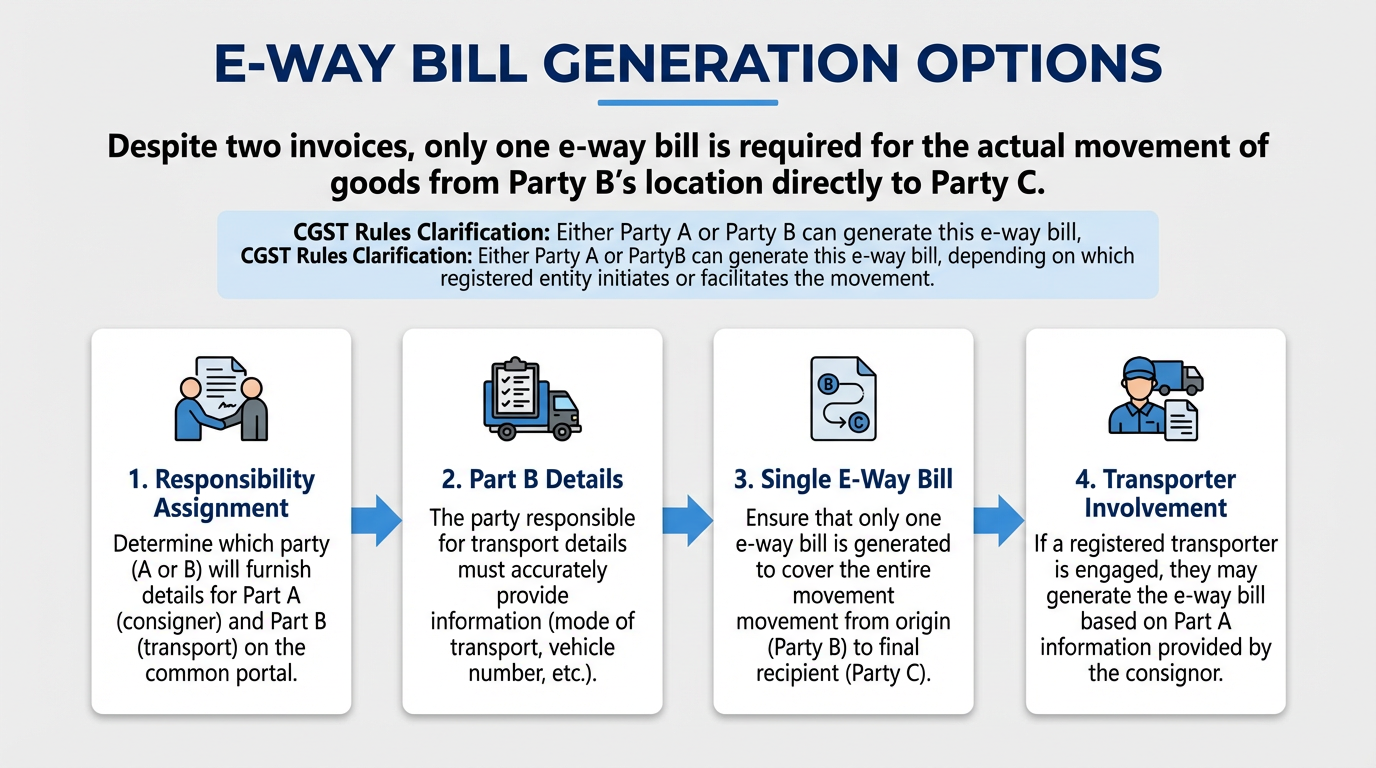
In a “Bill To Ship To” supply model, where ‘A’ instructs ‘B’ to send goods directly to ‘C’, resulting in two supplies and two invoices, either ‘A’ or ‘B’ can generate the e-way bill. Only one e-way bill is required for the physical movement of goods.

Validity of E-way Bill

Validity of E-way Bill

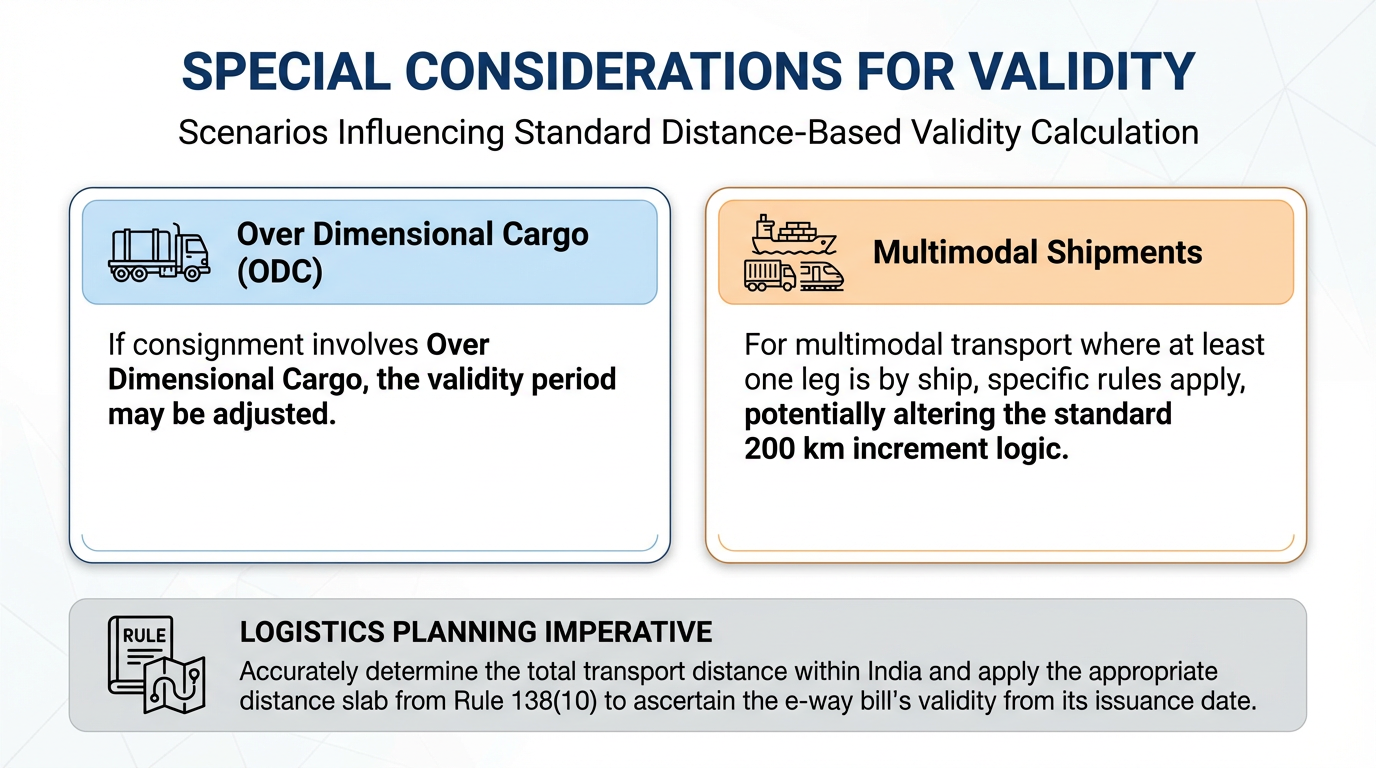
The validity period of an e-way bill is determined by the distance of transport. Typically, for distances up to 200 km, it is valid for one day. An additional day is granted for every subsequent 200 km or part thereof. Special provisions apply for Over Dimensional Cargo or multimodal shipments.

By mandating the carrying of these prescribed documents and devices, Section 68 enables proper officers to effectively intercept, inspect, and verify the movement of goods, thereby upholding the integrity of the GST system.

Rate this chapter

0.00 / 5. Vote count: 0

Leave a comment