
How to Avoid GST Notices: A Practical Compliance Guide for Decision Makers

To avoid GST notices, businesses must shift from reactive responses to proactive compliance. Tax authorities now leverage advanced data analytics, AI, and cross-linked databases (such as Income Tax and Customs) to automatically flag even minor discrepancies.
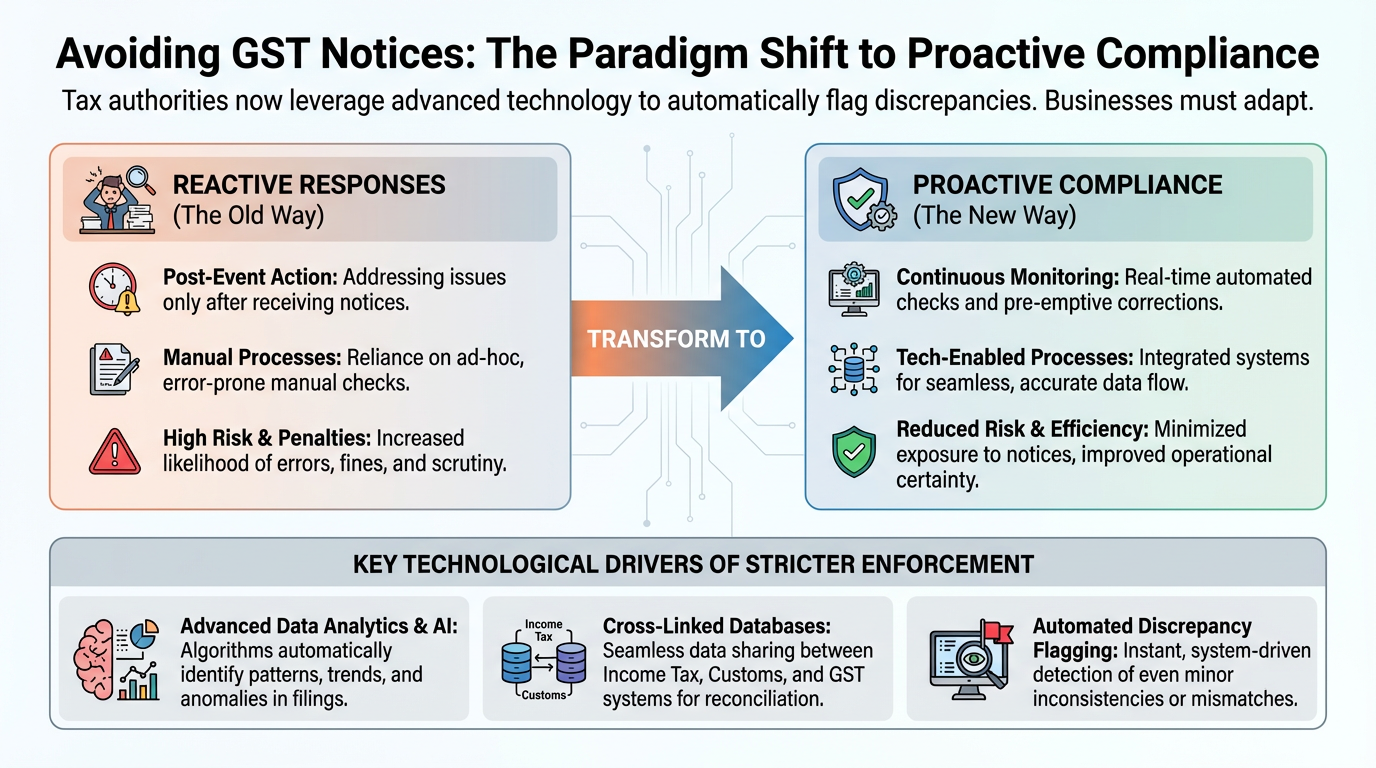
Here are the key actions and best practices you should take to avoid GST notices, based on the provided sources:
1. Maintain Strict and Regular Reconciliations
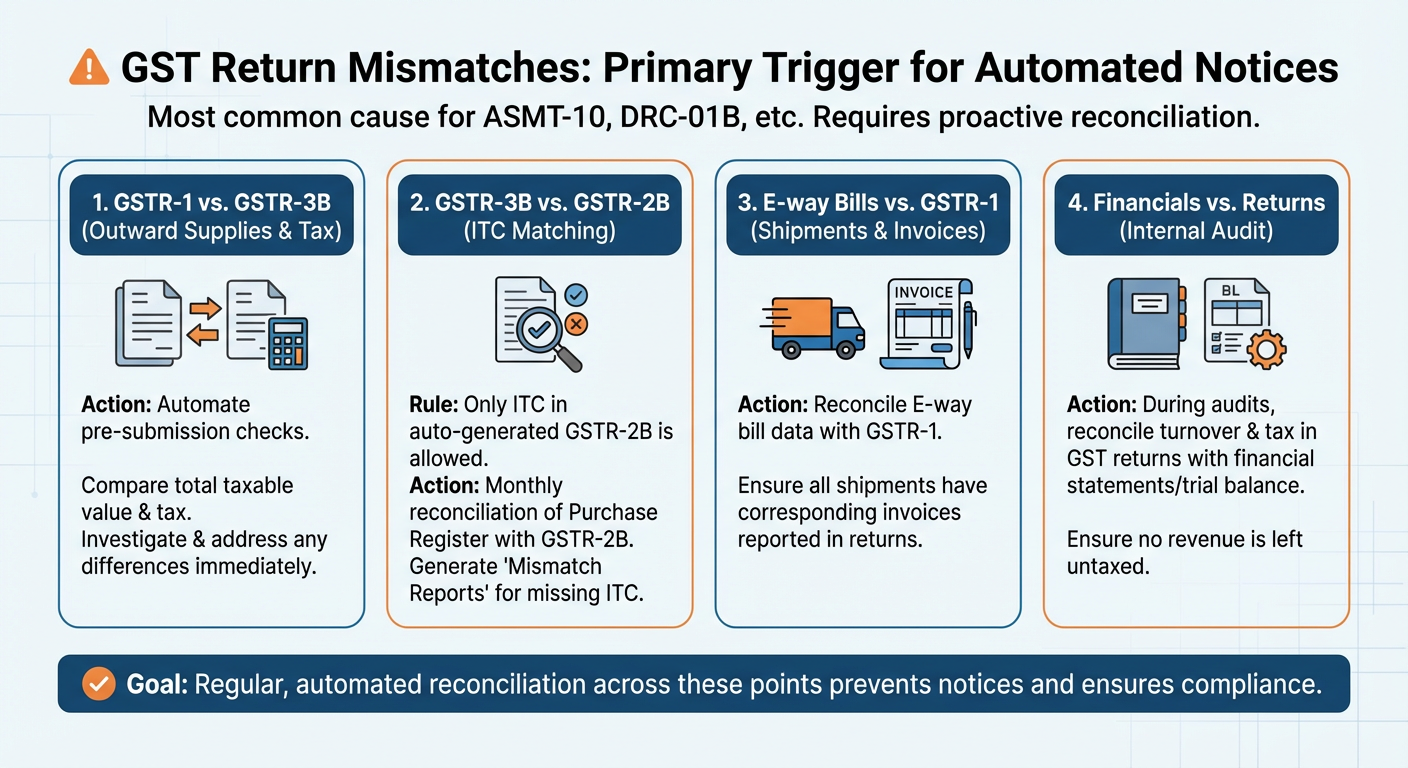
Mismatches between returns are the most common trigger for automated notices (such as ASMT-10 or DRC-01B).
-
GSTR-1 vs. GSTR-3B: Automate checks to compare the total taxable value and tax in your outward supplies (GSTR-1) with the tax paid (GSTR-3B) before submission. Investigate and address any differences immediately.
-
GSTR-3B vs. GSTR-2B (ITC Matching): Only ITC that appears in your auto-generated GSTR-2B is allowed. Do a monthly reconciliation of your purchase register with GSTR-2B and generate "Mismatch Reports" to track missing ITC.
-
E-way Bills vs. GSTR-1: Reconcile e-way bill data with GSTR-1 to ensure all shipments have corresponding invoices reported in your returns.
-
Financials vs. Returns: During internal audits, reconcile the turnover and tax declared in GST returns with your financial statements/trial balance to ensure no revenue streams are left untaxed.
 2. Implement Robust Vendor Management
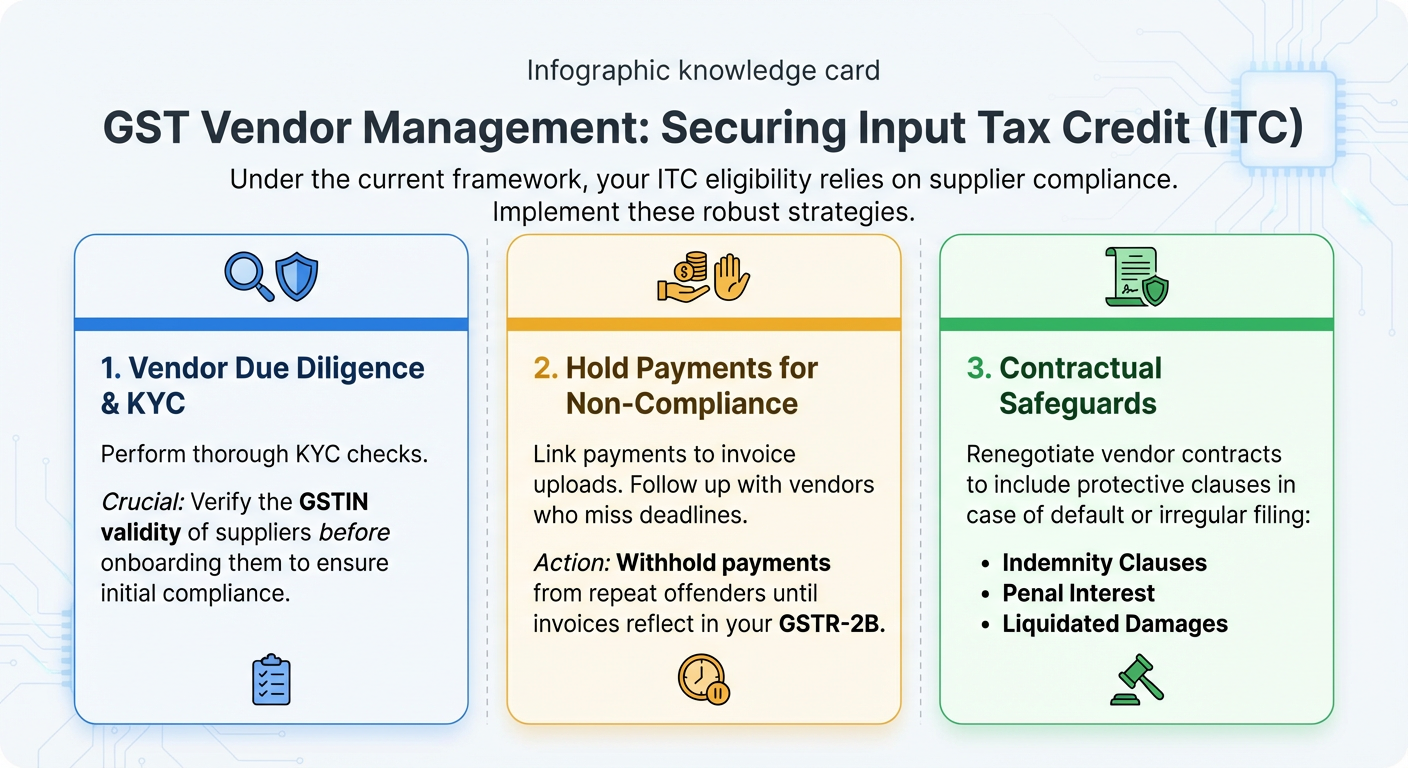
Under the current GST framework, your eligibility for Input Tax Credit (ITC) is heavily dependent on your supplier's compliance.
-
Vendor Due Diligence/KYC: Perform proper KYC and verify the GSTIN validity of suppliers before onboarding them.
-
Hold Payments for Non-Compliance: Follow up with vendors who miss uploading invoices. Consider withholding payments from repeat offenders until their invoices reflect in your GSTR-2B.
-
Contractual Safeguards: Renegotiate vendor contracts to include appropriate indemnity clauses, penal interest, or liquidated damages in case they default on their tax payments or file returns irregularly.
3. Ensure Timely and Accurate Filing
-
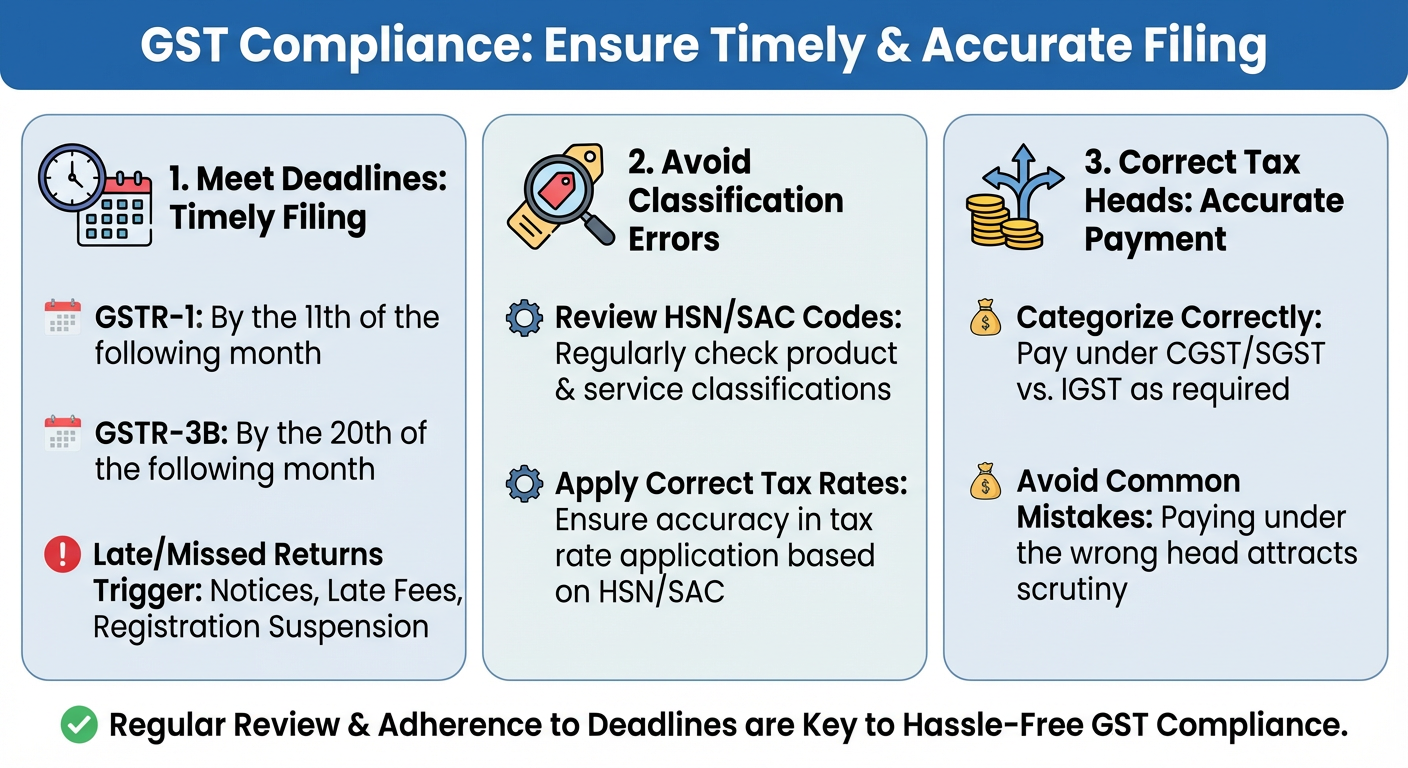
Meet Deadlines: Ensure timely filing of GSTR-1 (by the 11th) and GSTR-3B (by the 20th of the following month). Late or missed returns are primary triggers for notices, late fees, and potential registration suspension.
-
Avoid Classification Errors: Review your product and service classifications (HSN/SAC codes) regularly to ensure you are applying the correct tax rates.
-
Correct Tax Heads: Ensure taxes are paid under the correct category (e.g., CGST/SGST vs. IGST). Paying under the wrong head is a common mistake that attracts scrutiny.
4. Monitor Specific ITC Compliance Rules
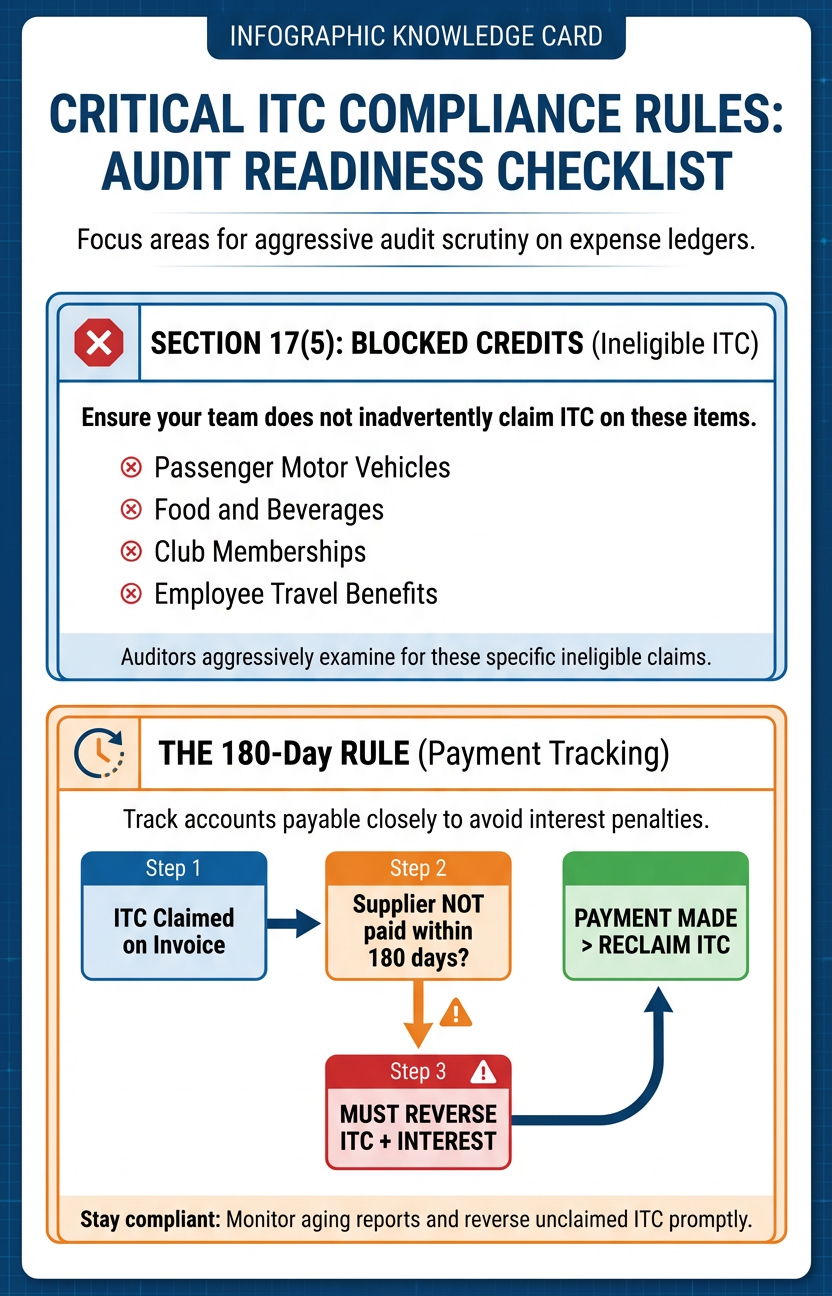
Auditors aggressively examine expense ledgers for ineligible ITC claims.
-
Section 17(5) Blocked Credits: Ensure your team does not inadvertently claim ITC on blocked items such as passenger motor vehicles, food and beverages, club memberships, or employee travel benefits.
-
The 180-Day Rule: Track accounts payable closely. If you take ITC on an invoice but fail to pay the supplier within 180 days, you must reverse the ITC with interest (you can reclaim it once the payment is made).
5. Leverage Technology and Internal Audits
-
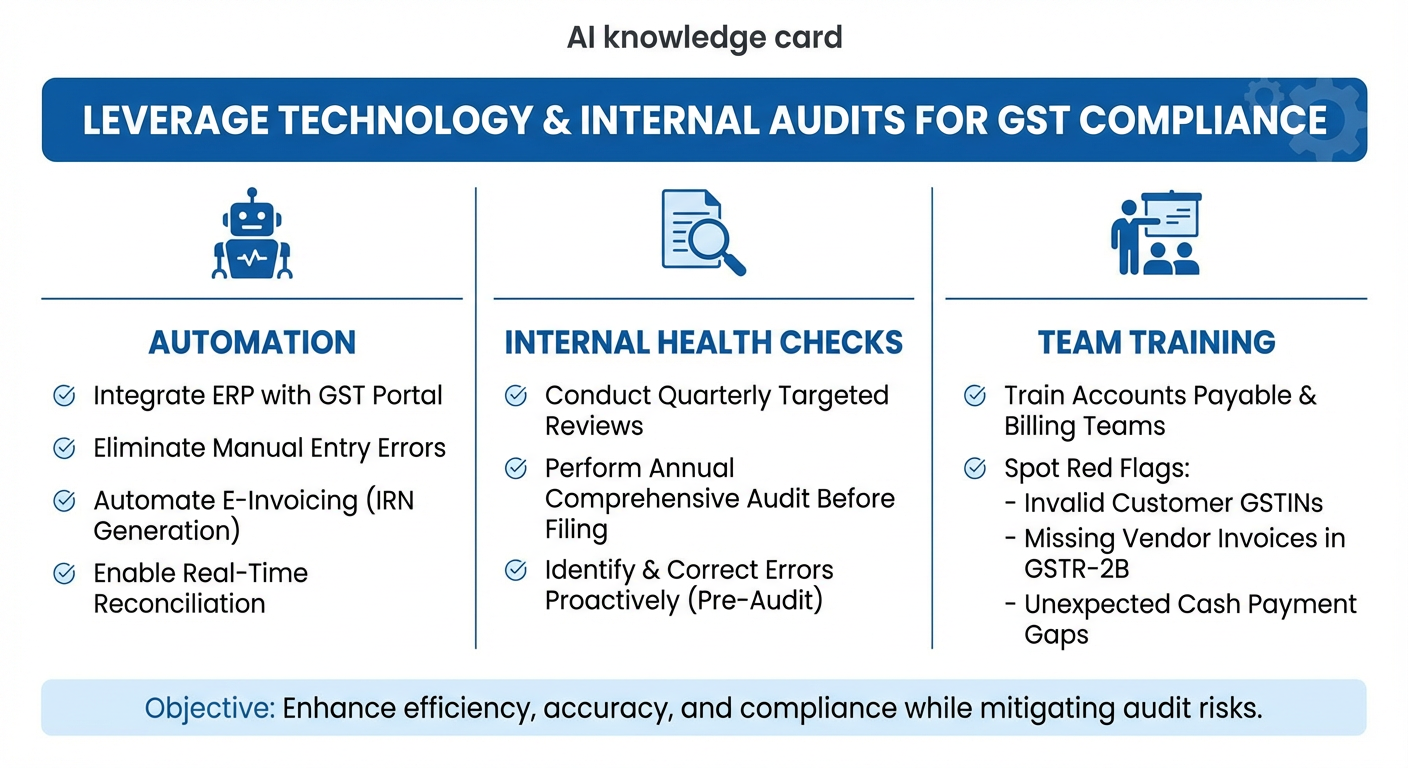
Automation: Integrate your ERP system with the GST portal to eliminate manual entry errors, automate e-invoicing (IRN generation), and enable real-time reconciliation.
-
Internal Health Checks: Conduct quarterly targeted reviews and an annual comprehensive audit before filing your annual return. This helps you identify and correct errors before the government audits you.
-
Team Training: Train your accounts payable and billing teams to spot red flags, such as invalid customer GSTINs, missing vendor invoices in GSTR-2B, or unexpected cash payment gaps.
6. Document Retention
-
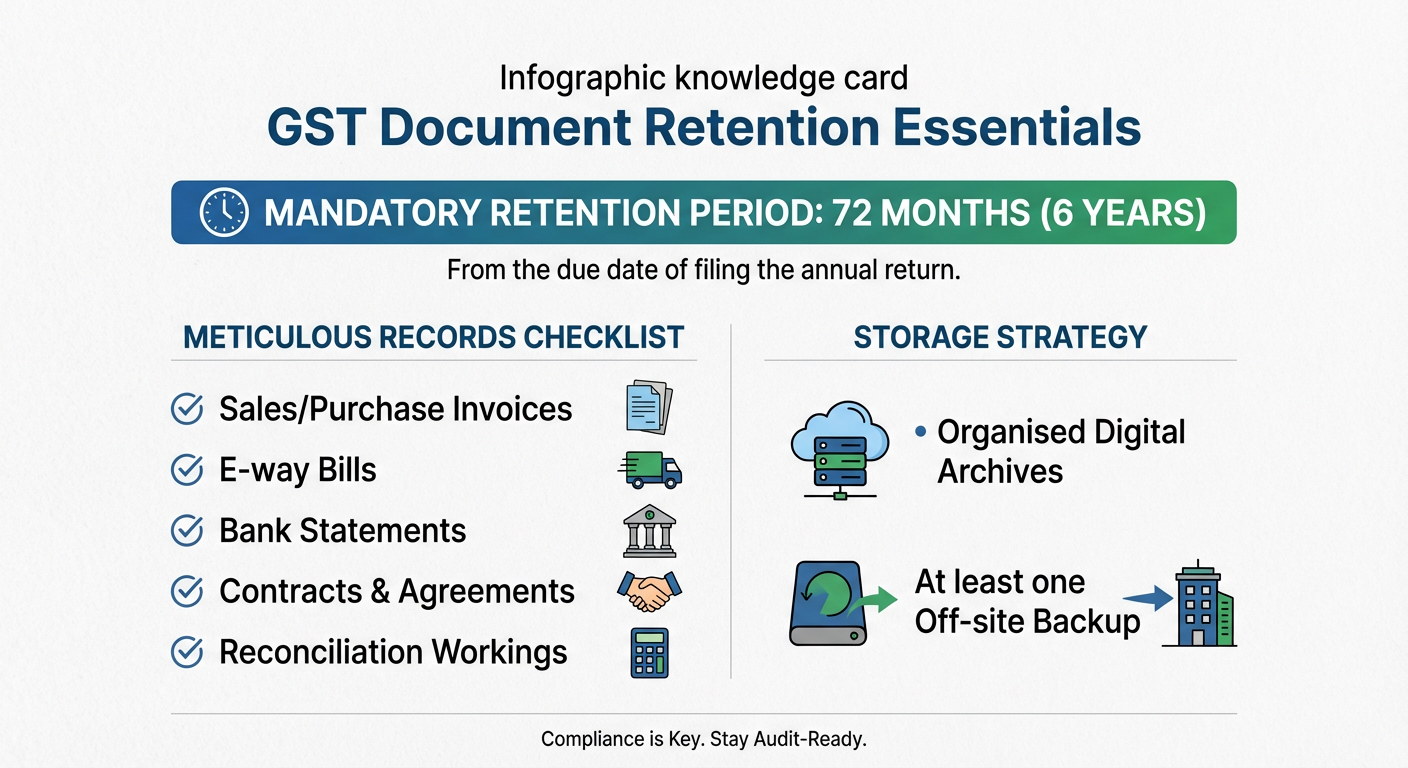
Maintain meticulous records (sales/purchase invoices, e-way bills, bank statements, contracts, and reconciliation workings).
-
GST law mandates keeping records for 72 months (6 years) from the due date of filing the annual return. Maintain organised digital archives with at least one off-site backup.
Conclusion:
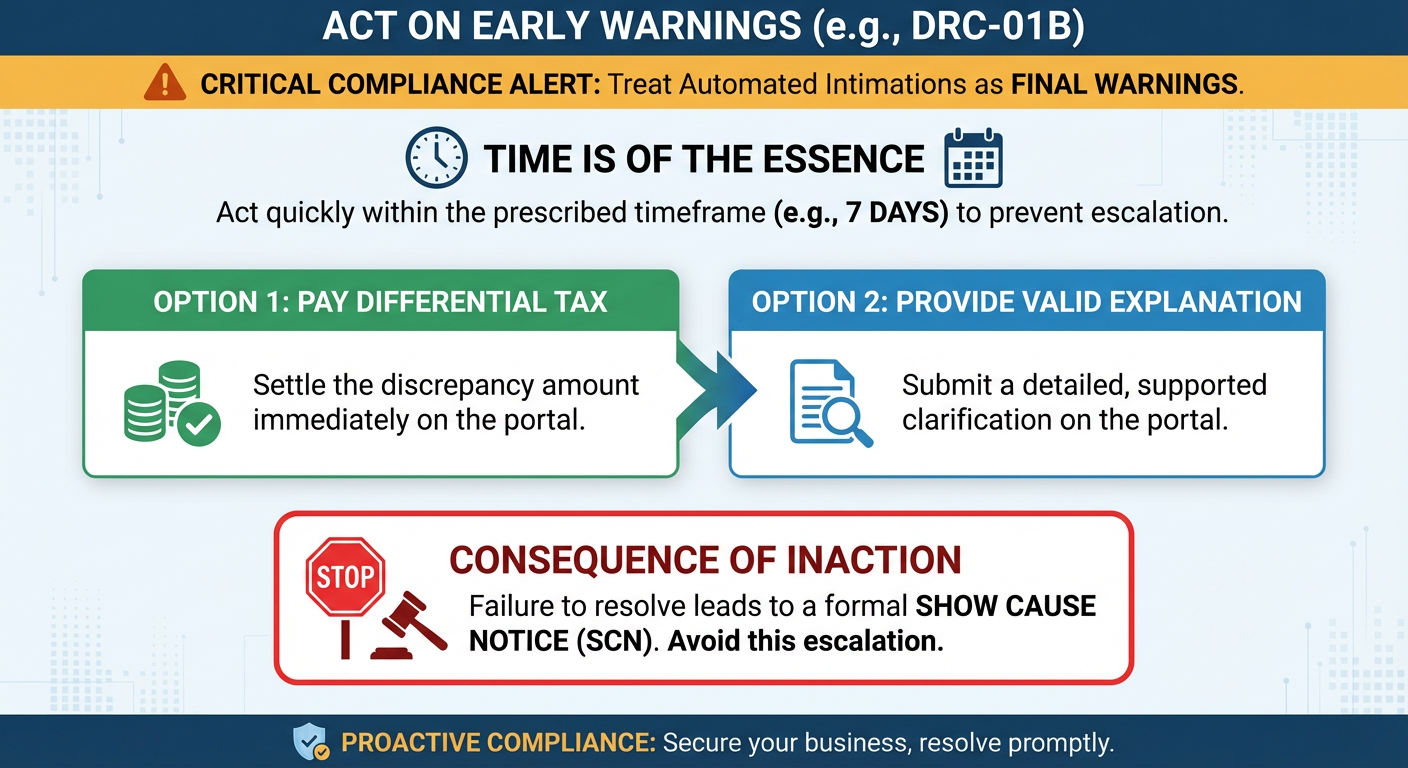
Act on Early Warnings: If you receive an automated intimation of discrepancy (like DRC-01B), treat it as a final warning. Act quickly within the prescribed timeframe (e.g., 7 days) to either pay the differential tax or provide a valid explanation on the portal to prevent it from escalating into a formal Show Cause Notice (SCN).
 Section 74 of GST | Section 130 of CGST Act | Section 47 of CGST Act | ARN Status GST | GST ARN Status | GST Track Application Status
About the Author

- ★★
- ★★
- ★★
- ★★
- ★★

Check out other Similar Posts

CFO Weekly Digest
A weekly newsletter delivering sharp insights, strategic analysis, and critical updates on business, finance, and compliance — designed exclusively for CFOs and Finance Leaders
Masters India is a GST Suvidha Provider (GSP) appointed by Goods and Services Tax Network (GSTN), a Government of India enterprise.
 Procapitus Business Park, 4th Floor, D 247/4A, Sector 63 Rd, Noida, Uttar Pradesh 201301
 info@mastersindia.co




Certified