Masters India
Masters India
Products
Tools
Resources
Company

Chapter 1: Persons Liable for Registration (Section 22)

Persons Liable for Registration (Section 22)

Overview of Registration Liability

Overview of Registration Liability

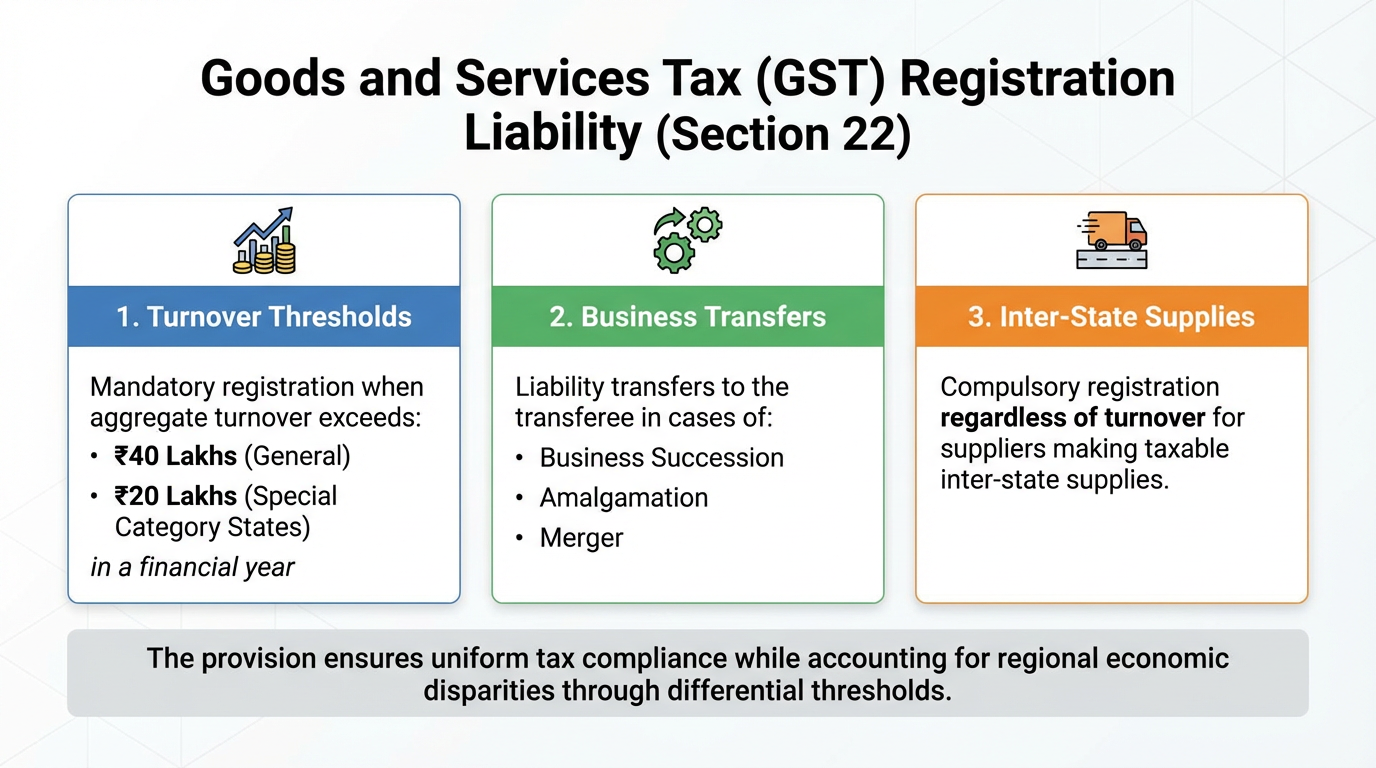
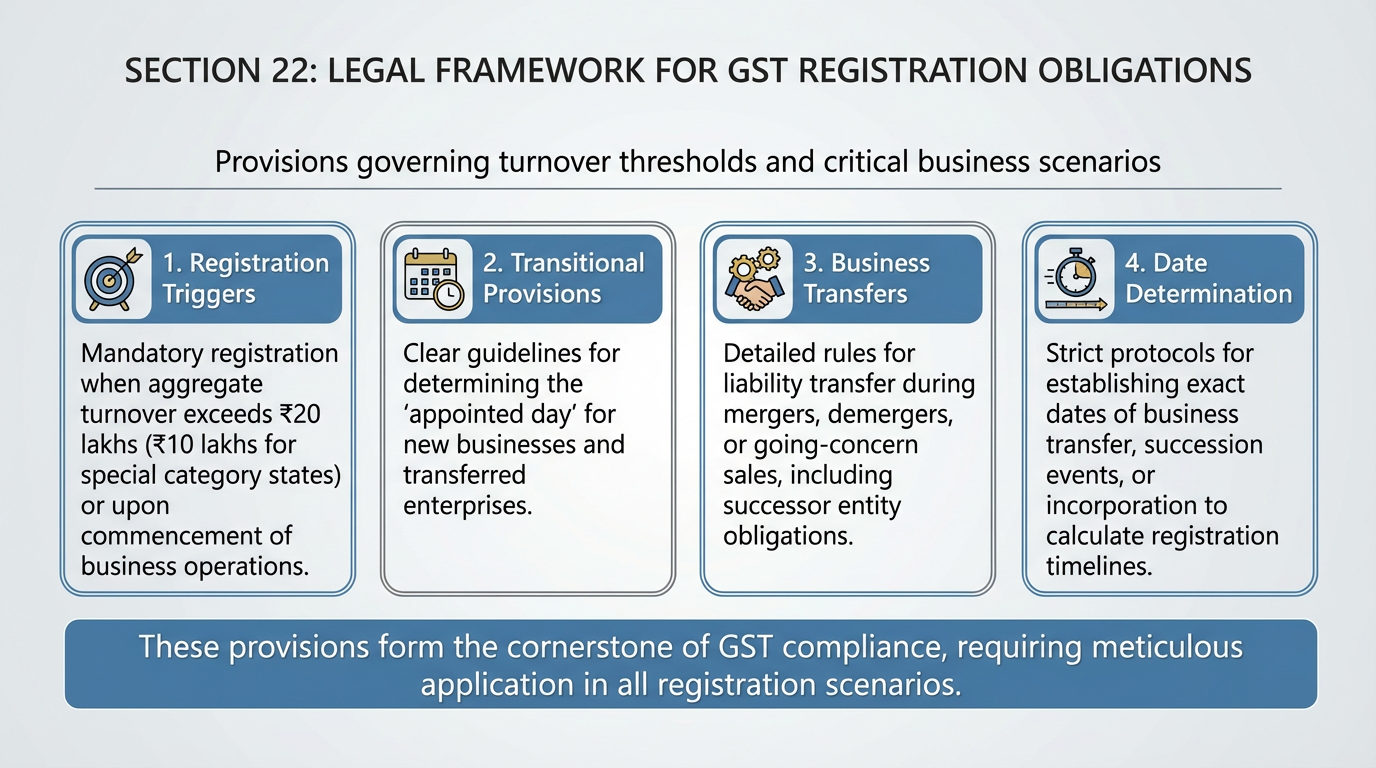
Section 22 of the GST Act delineates the conditions under which a supplier becomes liable for Goods and Services Tax (GST) registration. This section primarily addresses registration triggers based on aggregate turnover thresholds, specific provisions for special category States, and liabilities arising from business transfers, successions, or amalgamations of business entities. Understanding these provisions is crucial for ensuring compliance and seamless business operations under the GST regime.

Key Provisions Governing Registration
Key Provisions Governing Registration

Aggregate Turnover Thresholds

The primary determinant for GST registration liability is the aggregate turnover of a supplier in a financial year.

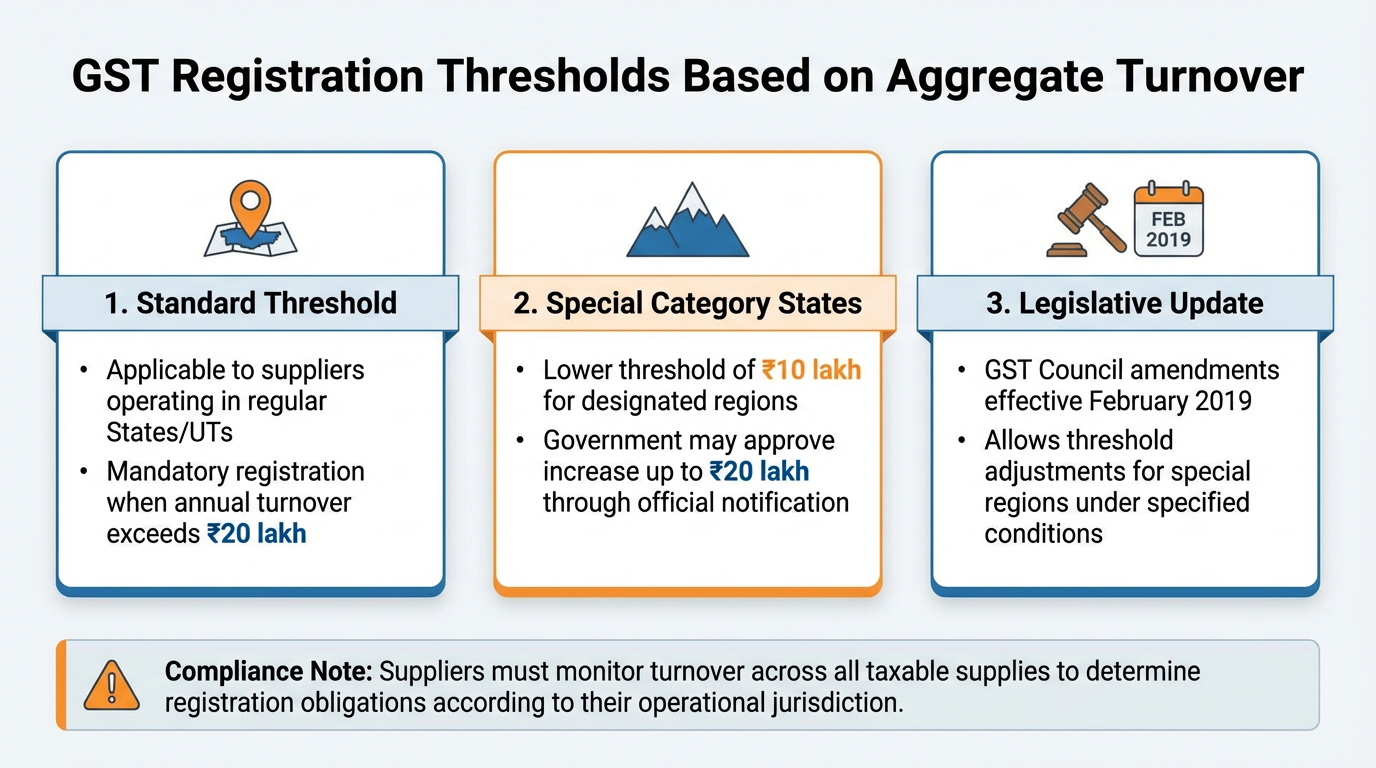
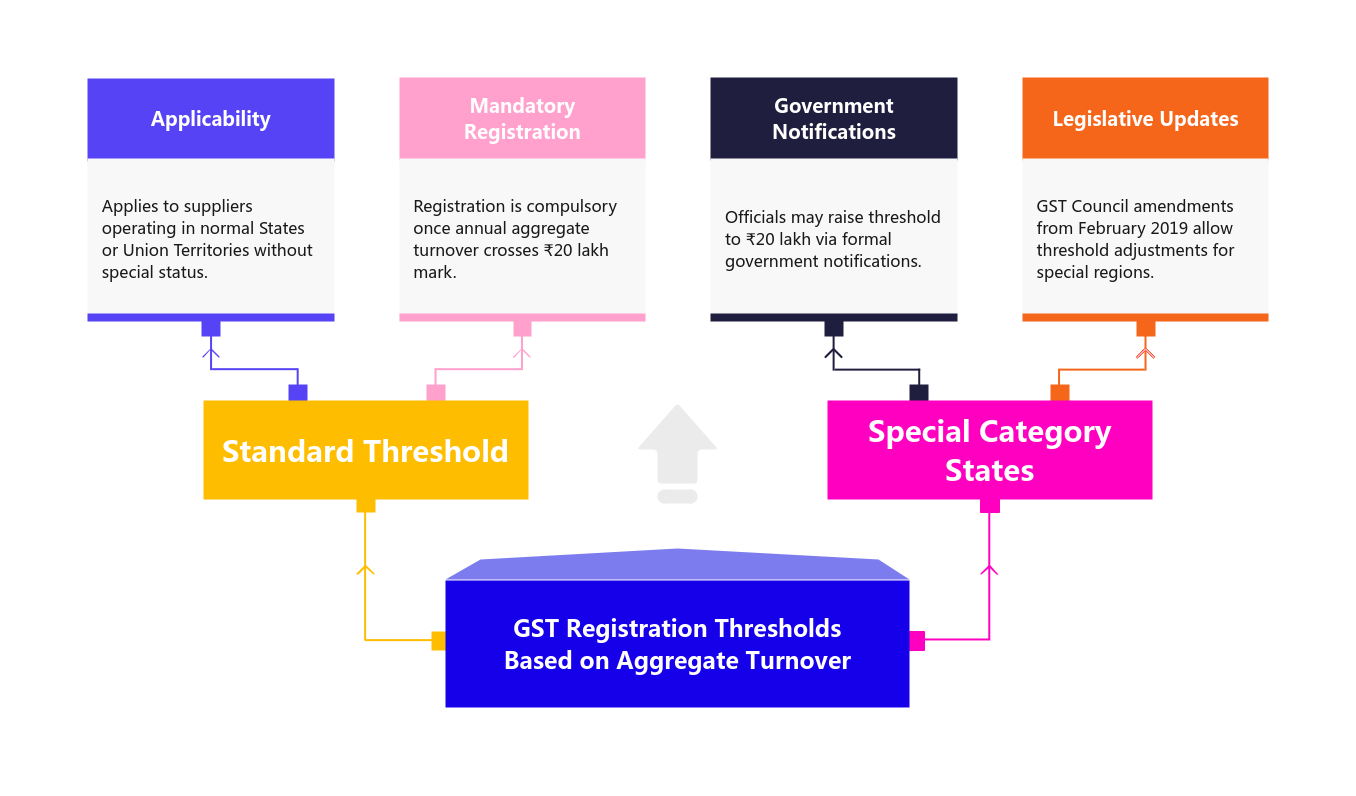
General Rule: Every supplier is liable to be registered in the State or Union Territory (excluding special category States) from which they make a taxable supply of goods or services, or both, if their aggregate turnover in a financial year exceeds .

Special Category States: For suppliers making taxable supplies from any designated special category State, the aggregate turnover threshold for registration is .

Government Discretion: The Government, upon the recommendation of the GST Council and at the request of a special category State, may enhance this  threshold to an amount not exceeding , subject to specified conditions and limitations. This amendment was introduced by the CCST (Amendment) Act, 2018, effective from February 1, 2019.

Learning Takeaway: For non-special category States, registration is mandated if annual aggregate turnover exceeds . For special category States, the threshold is , with potential for enhancement up to  via government notification.
Key Provisions Governing Registration (continued)

Transitional Registration for Existing Businesses

Transitional Registration for Existing Businesses

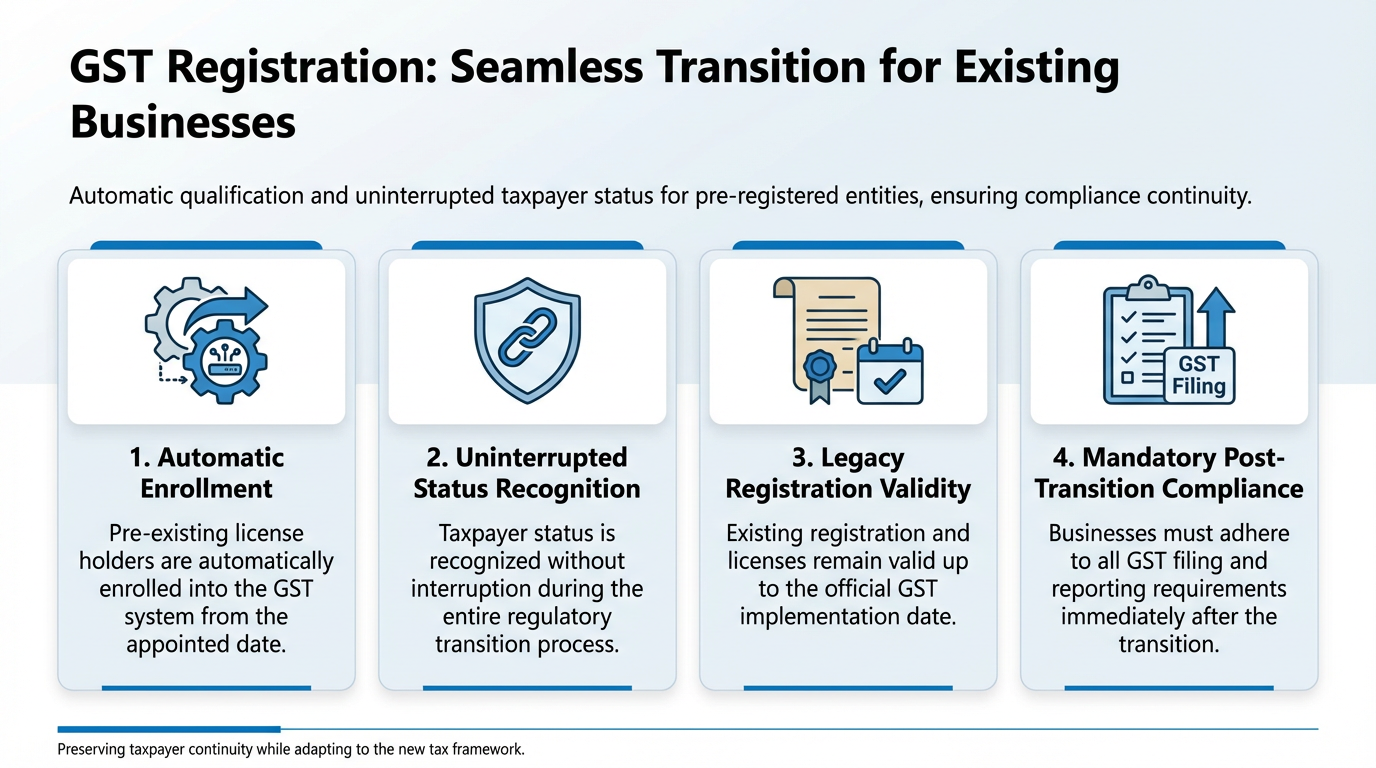
Persons already registered or holding a license under any existing law immediately preceding the “appointed day” are automatically liable for registration under the new GST regime from that appointed day. This provision ensures continuity of taxpayer status during the transition to GST.

Learning Takeaway: Existing registrations or licenses under previous tax regimes translate into GST registration obligations from the appointed day, maintaining an uninterrupted taxpayer status.

Business Transfers and Successions

Business Transfers and Successions

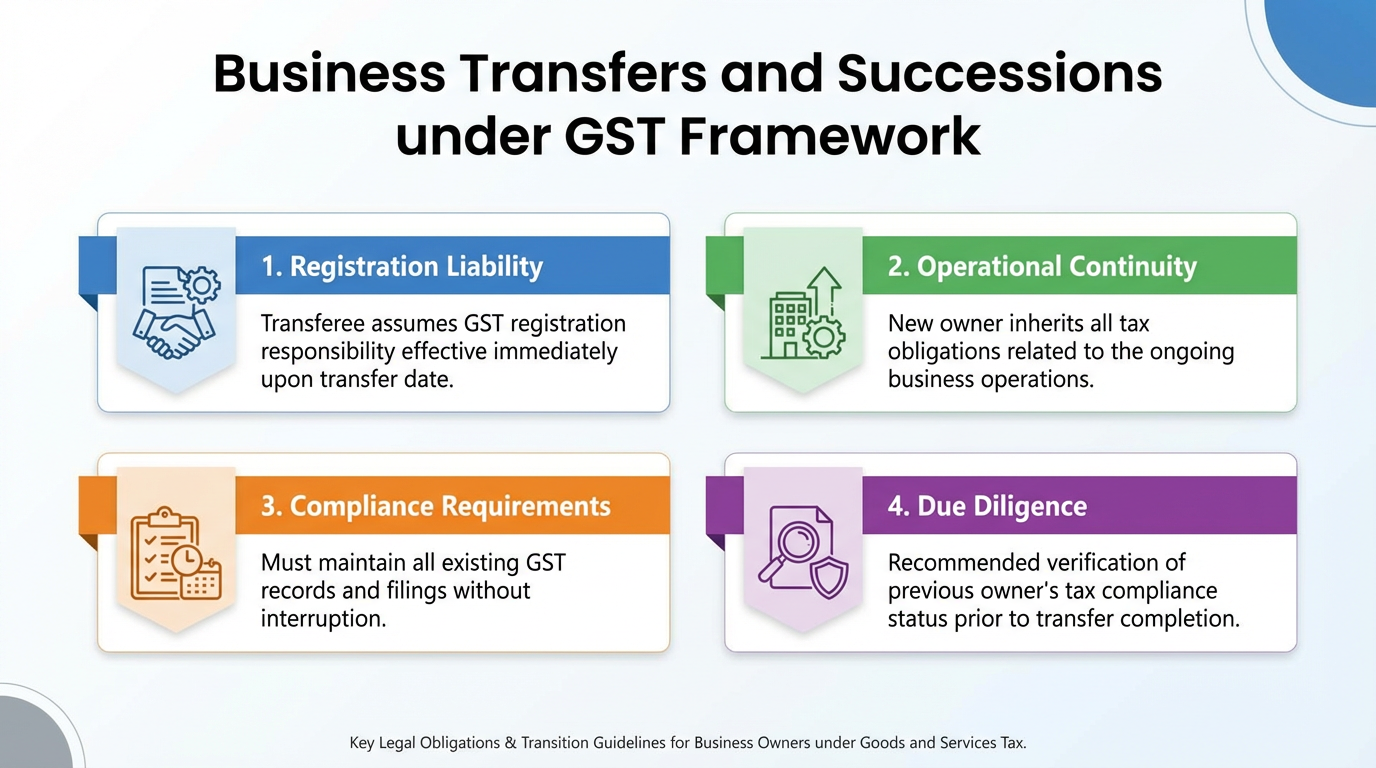
When a business carried on by a GST-registered taxable person is transferred to another person as a going concern (whether due to succession or other reasons), the transferee or successor assumes the liability for GST registration. This liability commences from the date of such transfer or succession.

Learning Takeaway: Transfers of businesses as a going concern trigger registration liability for the new owner from the date of transfer or succession, making the transferee responsible for GST registration.

Corporate Restructurings: Amalgamation and De-merger

Corporate Restructurings: Amalgamation and De-merger

In cases of corporate restructuring, specifically amalgamation or de-merger sanctioned through a scheme or arrangement, the transferee entity becomes liable for GST registration. The effective date for this registration liability is the date on which the Registrar of Companies issues a certificate of incorporation, giving effect to the court or tribunal order (or other confirming instrument) for the amalgamation or de-merger.

Learning Takeaway: Amalgamation or de-merger events impose registration liability on the transferee, effective from the date of the Certificate of Incorporation that formalizes the order.

Illustrative Examples

Illustrative Examples

To further clarify the application of Section 22, consider the following scenarios:

Key Takeaways

Section 22 is fundamental in defining GST registration liabilities, linking them to aggregate turnover thresholds and significant business life events. Tax experts must precisely understand:

The specific turnover thresholds for both standard and special category States.

The implications of the “appointed day” for transitional registrations.

How liabilities transfer to successors or transferees in going-concern transfers and corporate reorganizations.

The critical importance of identifying the exact dates of transfer, succession, or incorporation to determine the correct registration liability date.

A comprehensive understanding of these provisions is essential for ensuring full compliance with GST registration requirements.

Rate this chapter

0.00 / 5. Vote count: 0

Leave a comment