
Heydon's Rule (Mischief Rule): Meaning, Application & Importance in GST

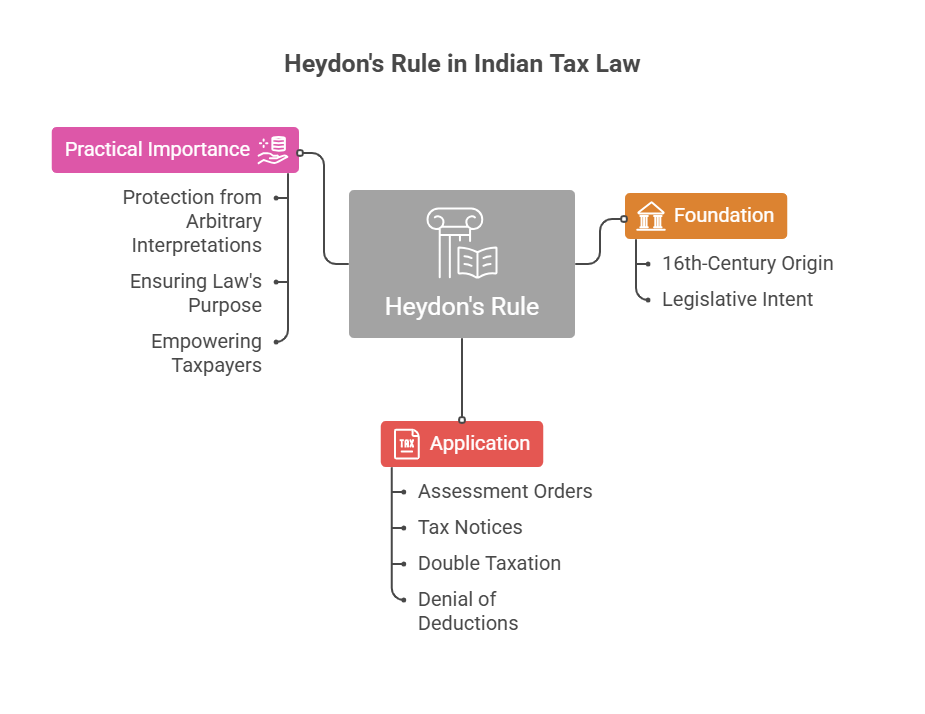
As a tax consultant, CFO, or finance head, you frequently encounter assessment orders and GST notices issued by tax authorities where the department adopts a hyper-literal interpretation of statutory provisions. This often results in double taxation, denial of legitimate deductions, or outcomes that defeat the very purpose for which the law was enacted. In such situations, Heydon’s Rule (Mischief Rule) emerges as one of the most powerful tools in statutory interpretation, enabling courts to look beyond the bare words and give effect to the true legislative intent.
This article examines the foundation, application, and practical importance of the Mischief Rule in taxation matters.
What is Heydon's Rule (Mischief Rule)?
Heydon’s Rule, also known as the Mischief Rule, is a classic principle of statutory interpretation laid down by the English courts in the 16th century. It directs judges to identify the “mischief” or defect that existed before the statute was enacted and interpret the law in a manner that suppresses the mischief and advances the remedy.
The rule was authoritatively stated in the landmark English case:
Heydon’s Case [1584] 3 Co Rep 7a
While interpreting any statute, the following four questions must be considered:
-
What was the common law before the making of the Act?
-
What was the mischief and defect for which the common law did not provide?
-
What remedy has the Parliament resolved and appointed to cure the disease?
-
What is the true reason of the remedy?
This purposive approach ensures that the statute is construed to achieve its objective rather than being frustrated by rigid literal construction.
.png)
When should Heydon's Rule be applied?
Courts generally apply this rule in the following situations:
-
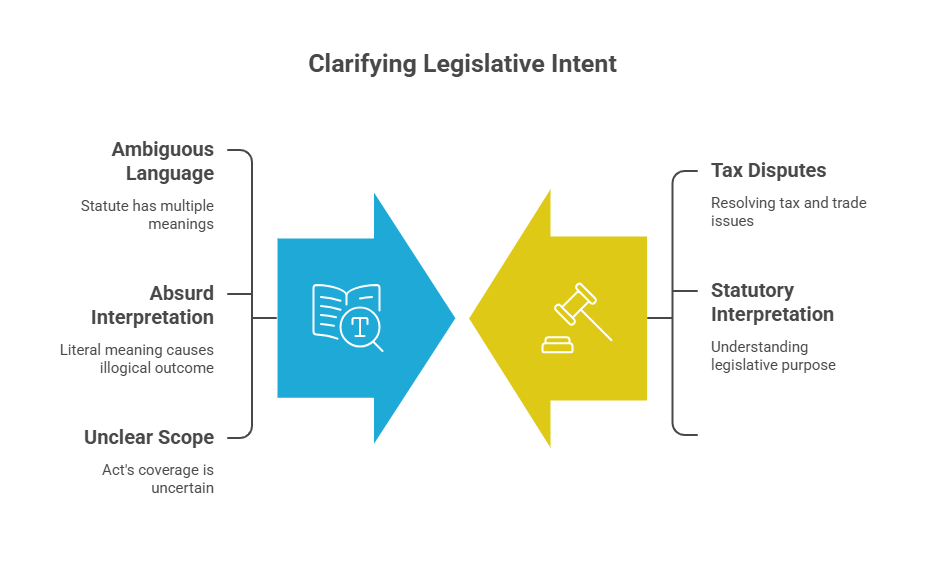
When the language of the statute is ambiguous or capable of more than one meaning.
-
When literal interpretation leads to absurdity or defeats the object of the legislation.
-
When it is unclear whether a particular transaction or act falls within the scope of the provision.
However, the rule cannot be used to rewrite the statute or override clear and unambiguous legislative language.
Landmark Application in Indian Tax Jurisprudence
Indian courts, including the Supreme Court, have repeatedly applied the Mischief Rule in tax disputes, particularly where multiple taxation or restriction on free trade was involved, making it an important principle in any effective GST litigation and dispute resolution strategy.
1. CIT v. Sundaradevi (1957) 32 ITR 615 (SC)
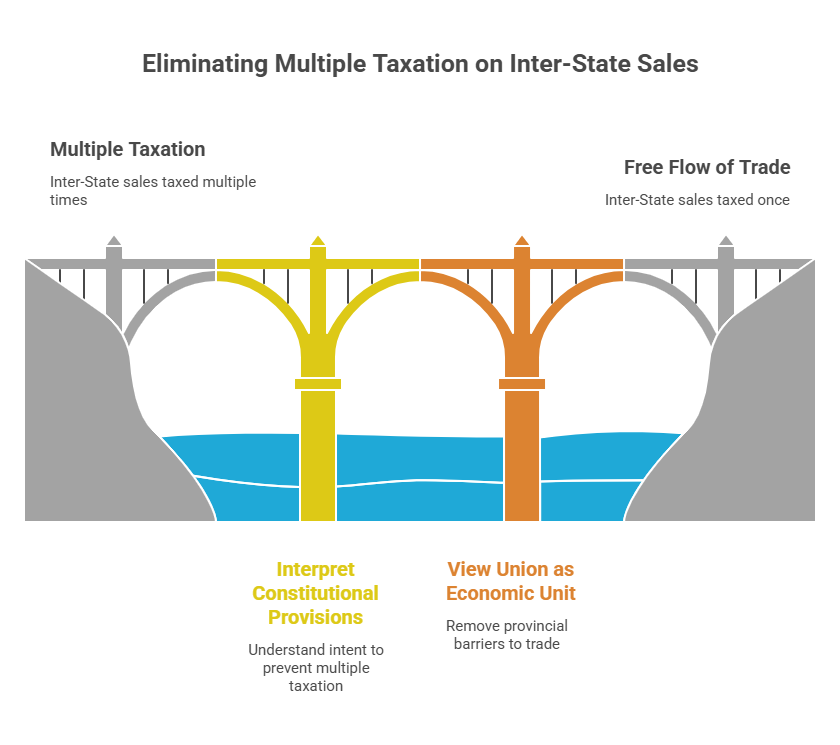
In this important ruling, the Supreme Court applied the mischief rule and decided the matter in favour of the assessee. The Court observed that the provision was intended to prevent multiple taxation and to ensure the free flow of inter-State trade and commerce. It held that the Union of India must be viewed as one economic unit without provincial barriers — a principle drawn from Article 286 of the Constitution.
2. Bengal Immunity Co. v. State of Bihar (AIR 1955 SC 661)
This judgment remains a classic example of the application of mischief rule principles in tax matters. The Supreme Court struck down interpretations that permitted multiple taxation on inter-State sales. The Court emphasised that such multiple taxation was the very “mischief” the constitutional provisions sought to eliminate.
“The Union of India is to be viewed as one economic unit without any provincial obstruction that the constitution maker adopted Article 286 in the Constitution.”
Practical Importance for Tax Professionals
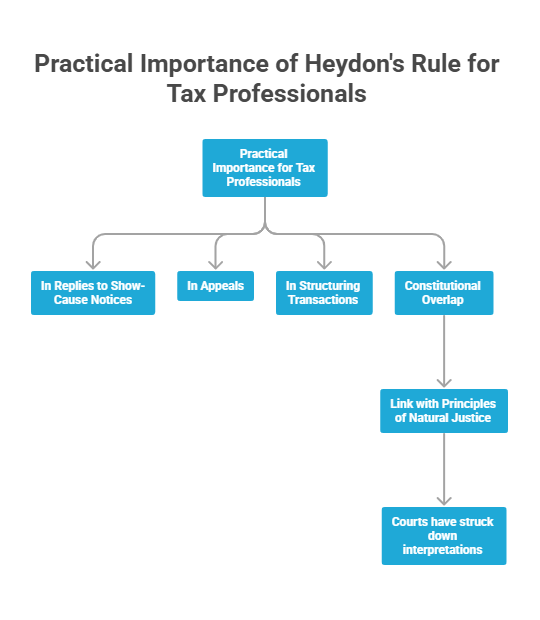
For practicing tax consultants and finance professionals, Heydon’s Rule offers several strategic advantages:
-
In Replies to Show-Cause Notices: Demonstrate how the department’s interpretation creates the same mischief the legislature intended to cure.
-
In Appeals: Argue legislative intent by referring to the Statement of Objects and Reasons, Finance Minister’s speech, or parliamentary debates.
-
In Structuring Transactions: Align arrangements with the remedial purpose of the provision to make them defensible.
-
Constitutional Overlap: The rule gains greater strength when combined with principles under Articles 14, 19(1)(g), and 286 of the Constitution.
Link with Principles of Natural Justice
A construction that leads to unfair double taxation, procedural hardship, or arbitrary results often violates the principles of natural justice. Courts have, on several occasions, struck down such interpretations not only on the basis of Heydon’s Rule but also on grounds of unreasonableness and violation of fair procedure.
Key takeaways for GST professionals
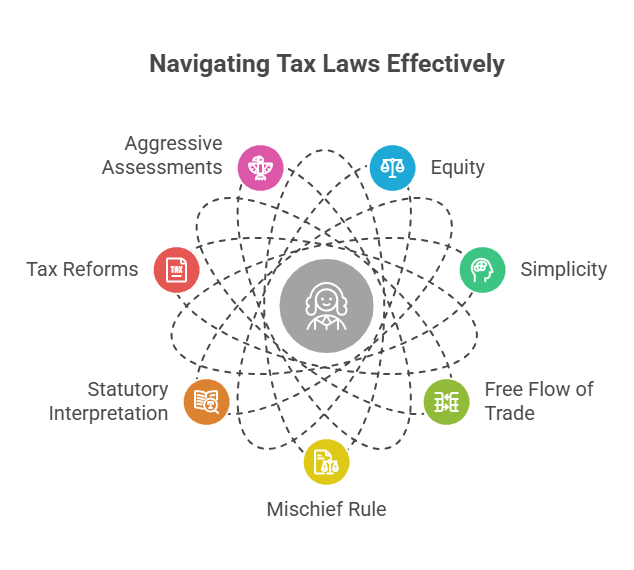
Heydon’s Rule reminds us that tax laws are not an end in themselves but a means to achieve economic objectives — equity, simplicity, and free flow of trade. When departmental actions ignore this larger purpose, the Mischief Rule provides a strong legal foundation to challenge them successfully.
In today’s environment of frequent tax reforms and aggressive assessments, mastering principles of statutory interpretation like Heydon’s Rule is no longer optional — it is essential.
Why should tax professionals discuss interpretation challenges?
Heydon's Rule reminds us that tax statutes should be interpreted in a way that advances the purpose of the law rather than defeating it through rigid or overly literal readings. As tax laws continue to evolve, this principle remains a valuable safeguard against interpretations that create unnecessary hardship, multiple taxation, or outcomes inconsistent with legislative intent.
For tax consultants, CFOs, and finance professionals, understanding the Mischief Rule is more than a theoretical exercise. It strengthens replies to GST notices, supports appeals, and helps businesses defend legitimate tax positions by aligning their arguments with the purpose behind the law. When combined with constitutional principles and natural justice, it becomes an important foundation for resolving complex tax disputes.
A strong understanding of statutory interpretation can significantly improve compliance and litigation outcomes. Masters India helps businesses navigate evolving GST regulations with technology-driven compliance solutions, legal insights, and expert guidance that support confident and compliant decision-making.
Legal Corner | Empowering Tax Compliance with Legal Clarity
About the Author

- ★★
- ★★
- ★★
- ★★
- ★★

Check out other Similar Posts

CFO Weekly Digest
A weekly newsletter delivering sharp insights, strategic analysis, and critical updates on business, finance, and compliance — designed exclusively for CFOs and Finance Leaders
Masters India is a GST Suvidha Provider (GSP) appointed by Goods and Services Tax Network (GSTN), a Government of India enterprise.
 Procapitus Business Park, 4th Floor, D 247/4A, Sector 63 Rd, Noida, Uttar Pradesh 201301
 info@mastersindia.co




Certified