

Why GSTR-1 Rarely Matches Other Reports (and How to Reconcile Without Panic)
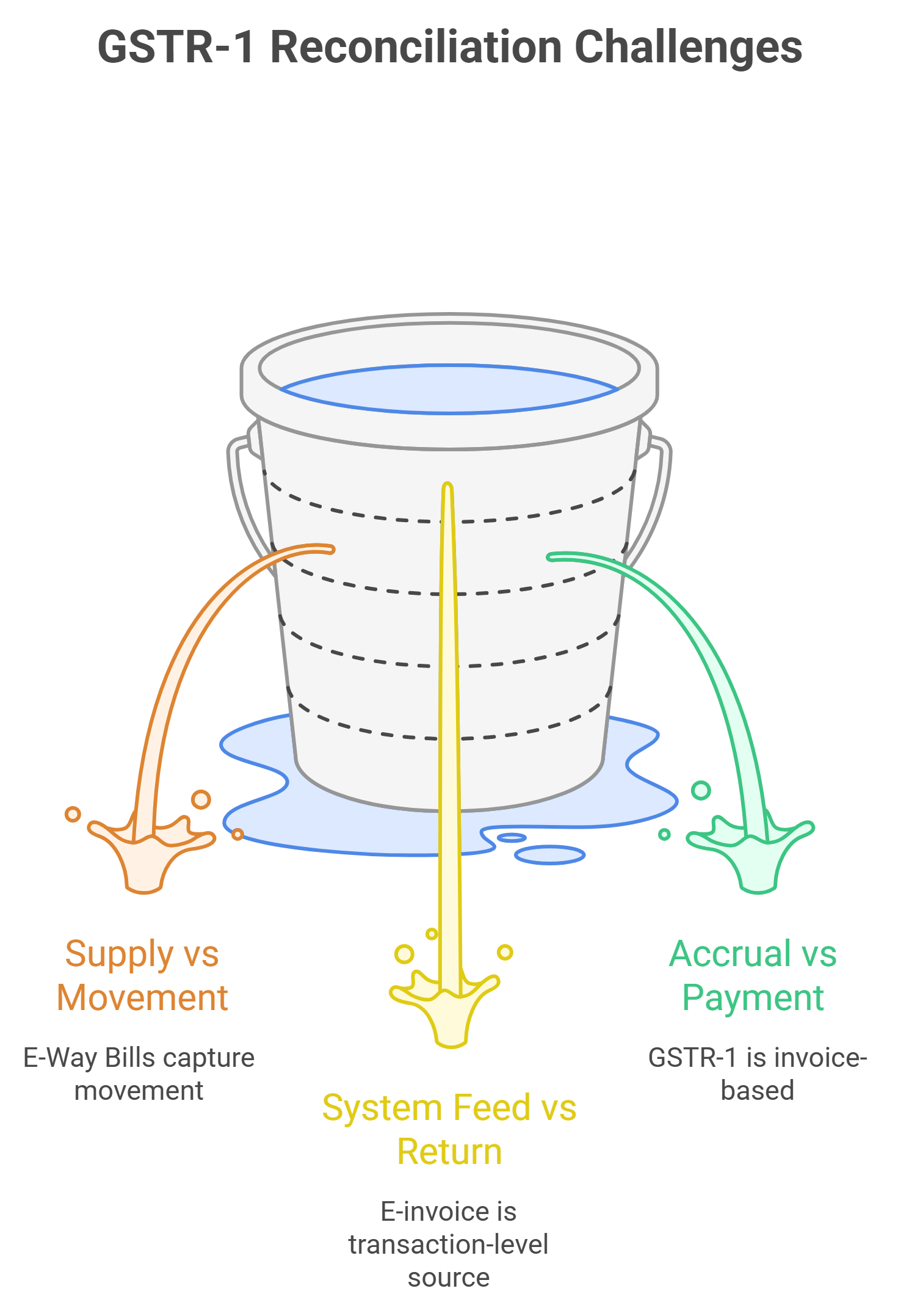
Businesses keep receiving mismatch alerts GSTR-1 vs E-Way Bills, GSTR-1 vs E-Invoice, GSTR-1 vs TDS.
Most teams assume “mismatch = wrong filing”. That’s the mistake.
A mismatch is only a signal.
Your job is to classify the reason, then close it with evidence or action.
1) GSTR-1 vs E-Way Bills: “Supply” vs “Movement”
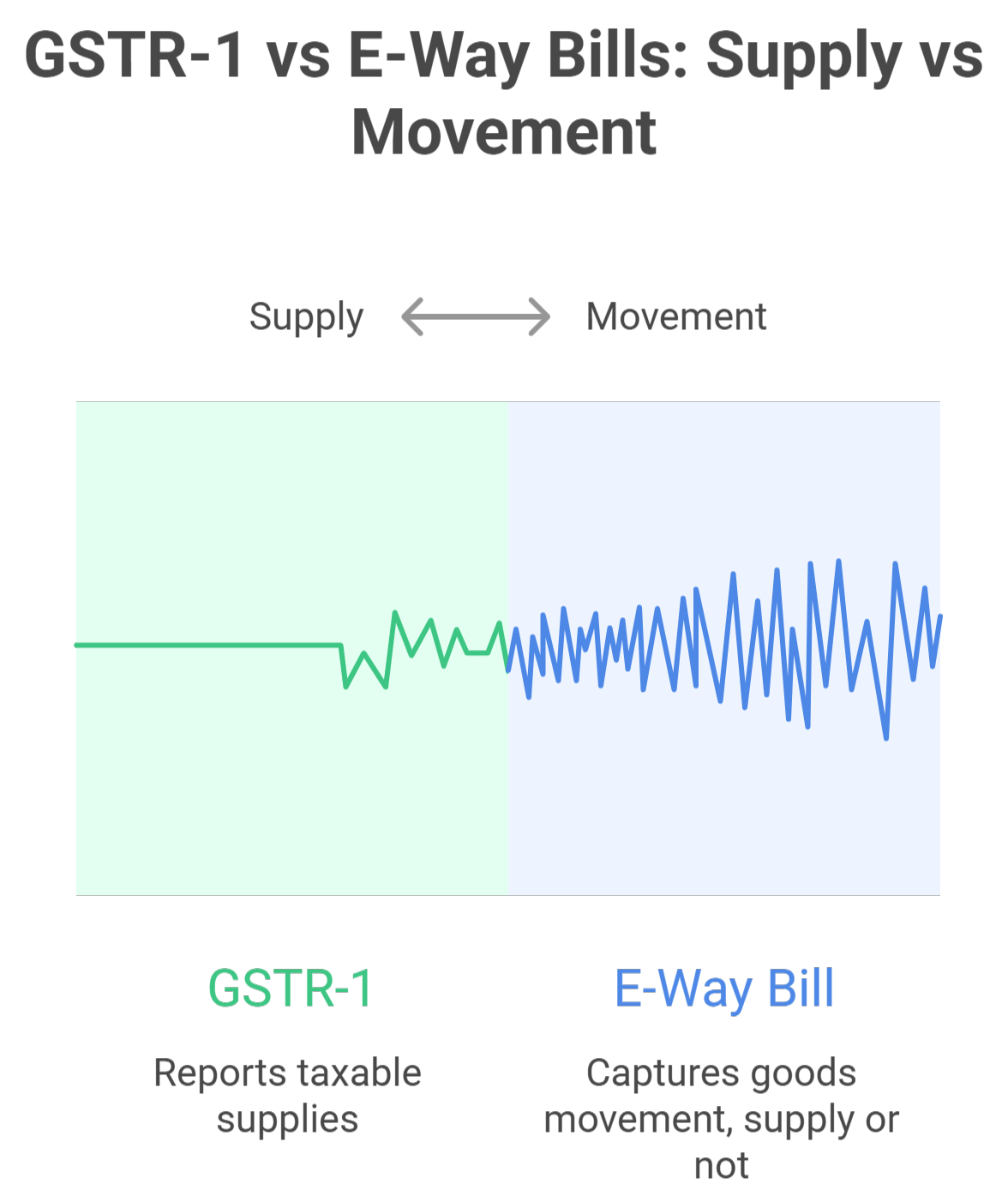
GSTR-1 reports supplies.
E-Way Bill captures movement of goods whether supply or not.
So the first truth is simple:
Many E-Way Bills will never appear in GSTR-1. That is normal.
Common reasons for differences
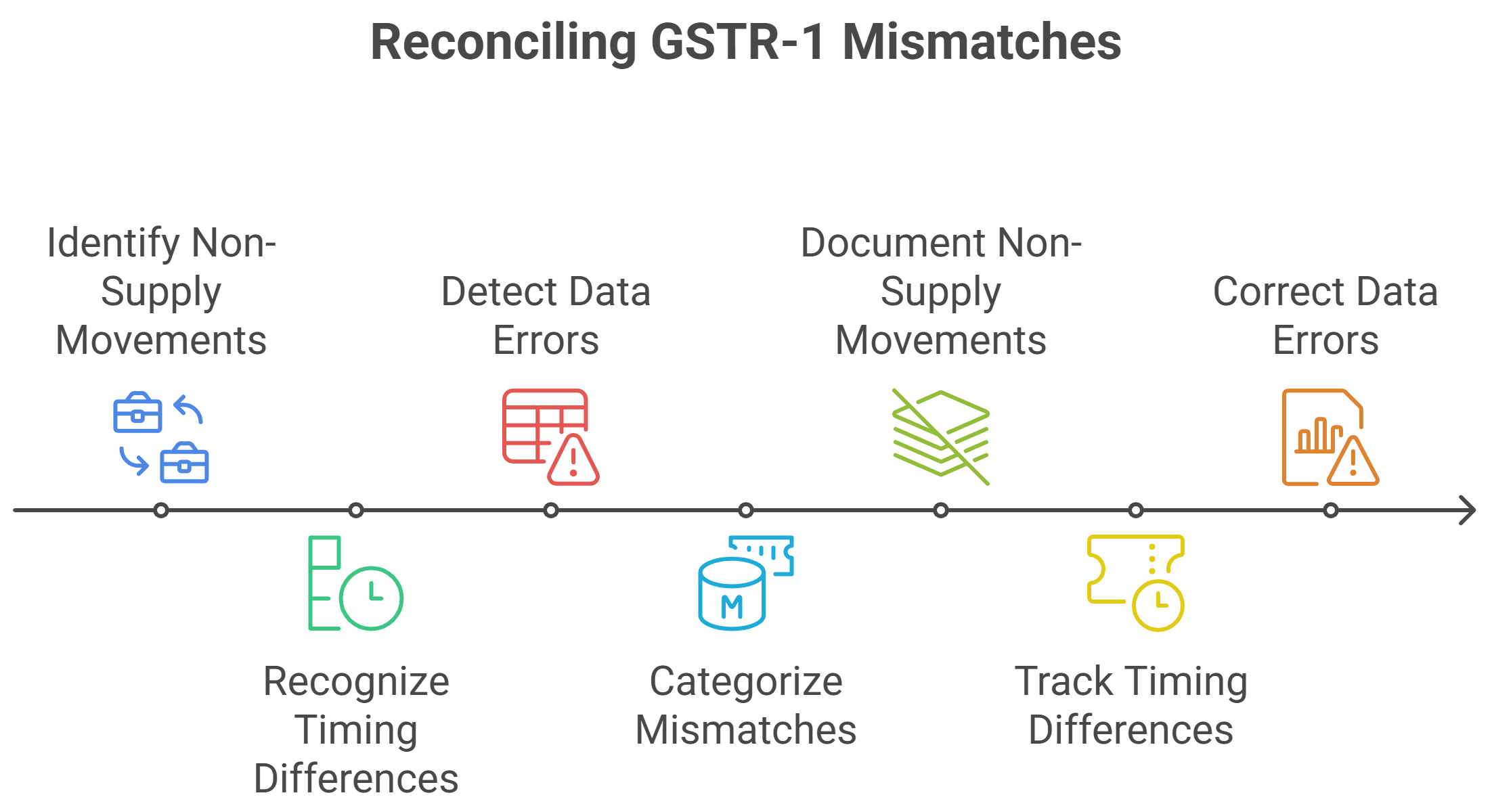
A. Non-supply movements (valid difference)
-
Job work movement (inputs / capital goods / moulds & dies)
-
Stock transfer / branch transfer on delivery challan
-
Goods sent for approval, exhibition, demo, testing, repair
-
Return movement (sales return / replacement)
-
Movement between principal and agent where supply may happen later
B. Timing differences
-
EWB on delivery challan now, invoice later (running account / consolidated billing)
-
Month-end dispatch, invoice raised next month
-
Multiple dispatches against one invoice (or one dispatch against multiple invoices)
C. Data errors
-
Wrong invoice number/date in EWB
-
Duplicate EWB
-
EWB generated but shipment cancelled / not executed
How to reconcile (guiding steps)
-
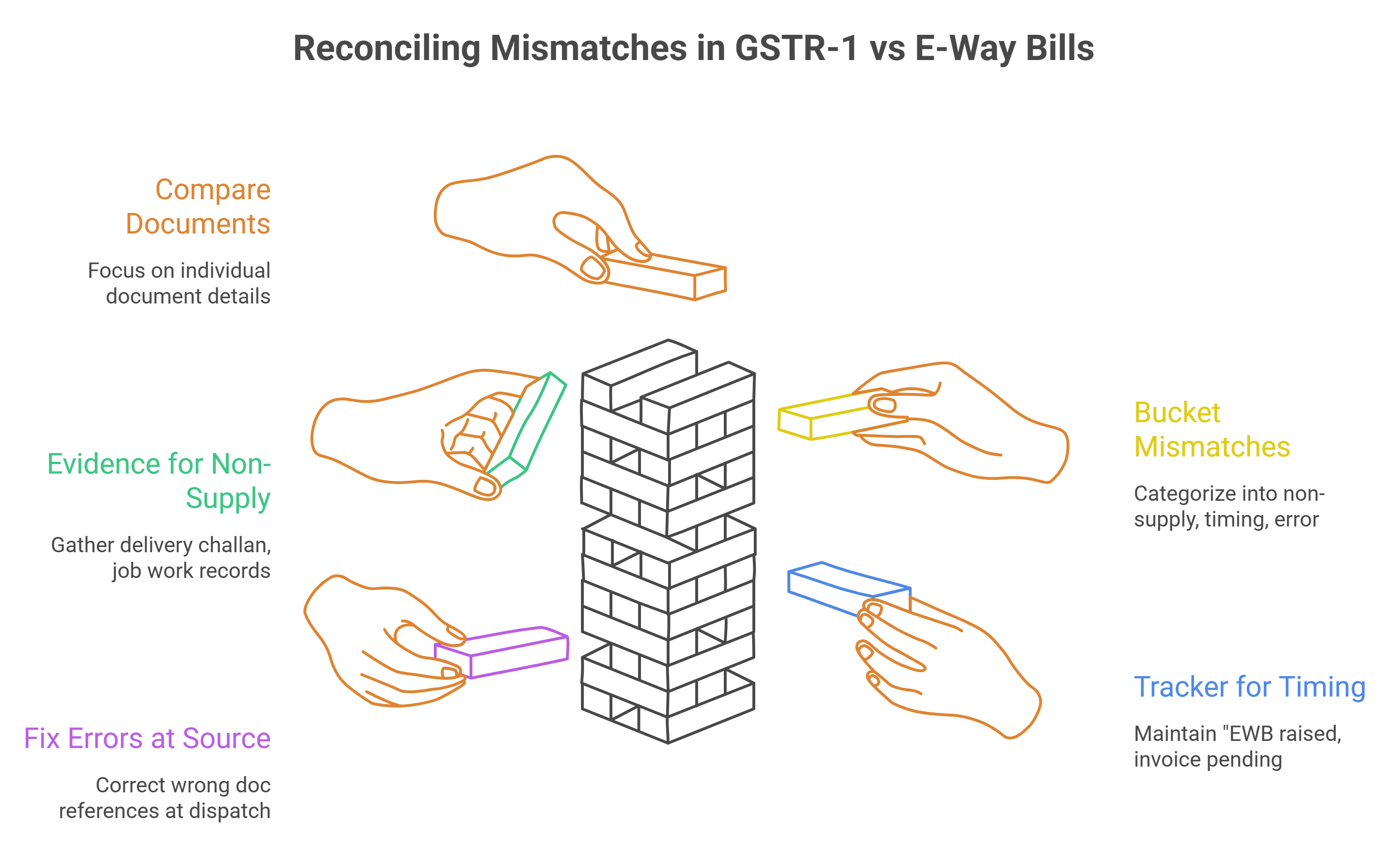
Don’t compare totals first. Compare documents.
-
Split mismatches into 3 buckets:
-
Non-supply (close with documents)
-
Timing (track to next month)
-
Error (cancel/correct or document)
-
-
For non-supply, keep a clean evidence set:
delivery challan + job work records + movement proof. -
For timing, maintain one tracker: “EWB raised, invoice pending”.
-
For errors, fix the source: wrong doc references must be corrected at dispatch level.
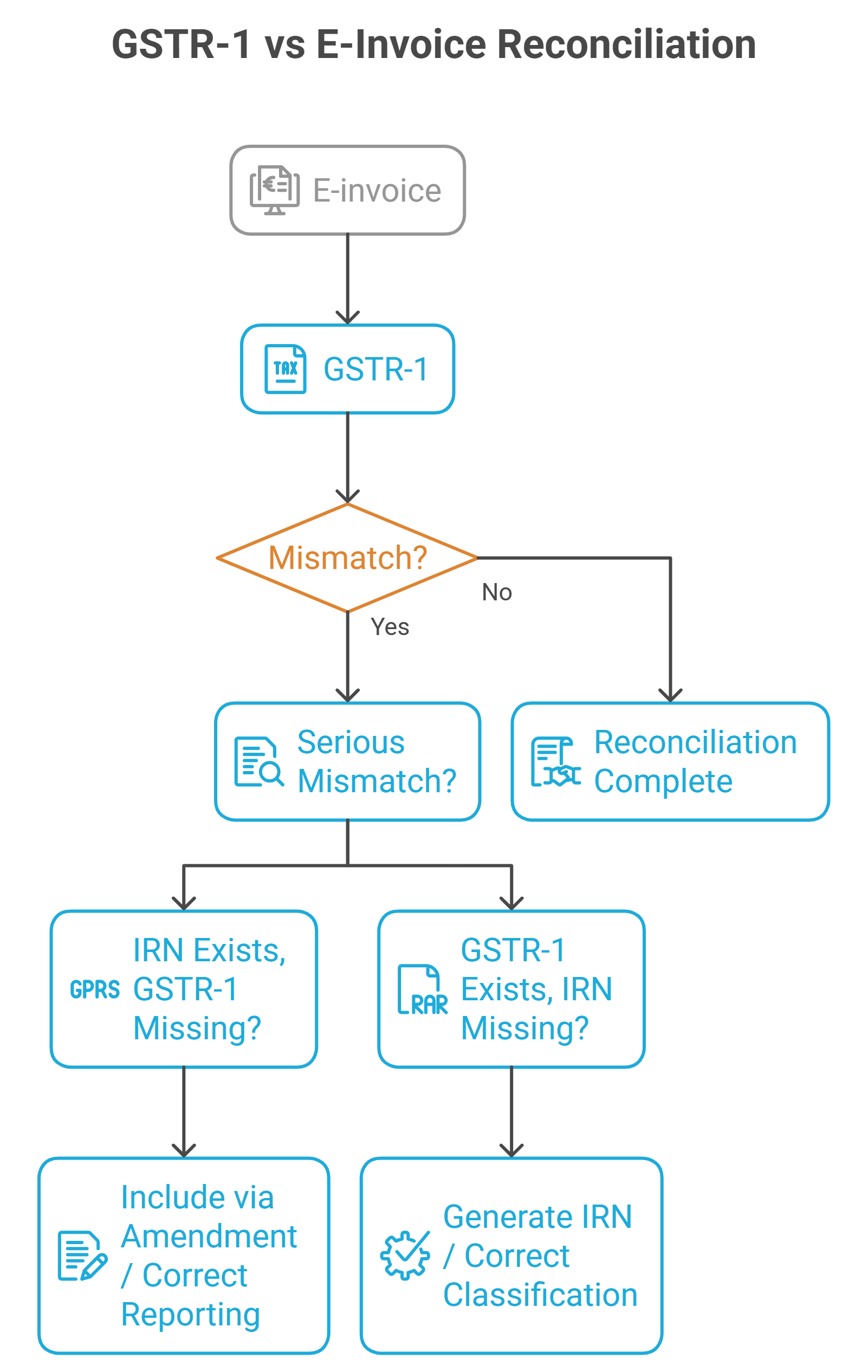
2) GSTR-1 vs E-Invoice: “System feed” vs “Return filed”
E-invoice is the transaction-level source (IRN).
GSTR-1 is the return compilation filed.
So mismatch here is serious only when it indicates:
-
IRN exists but is not reported in GSTR-1, or
-
GSTR-1 invoice exists, but IRN is missing where IRN was required.
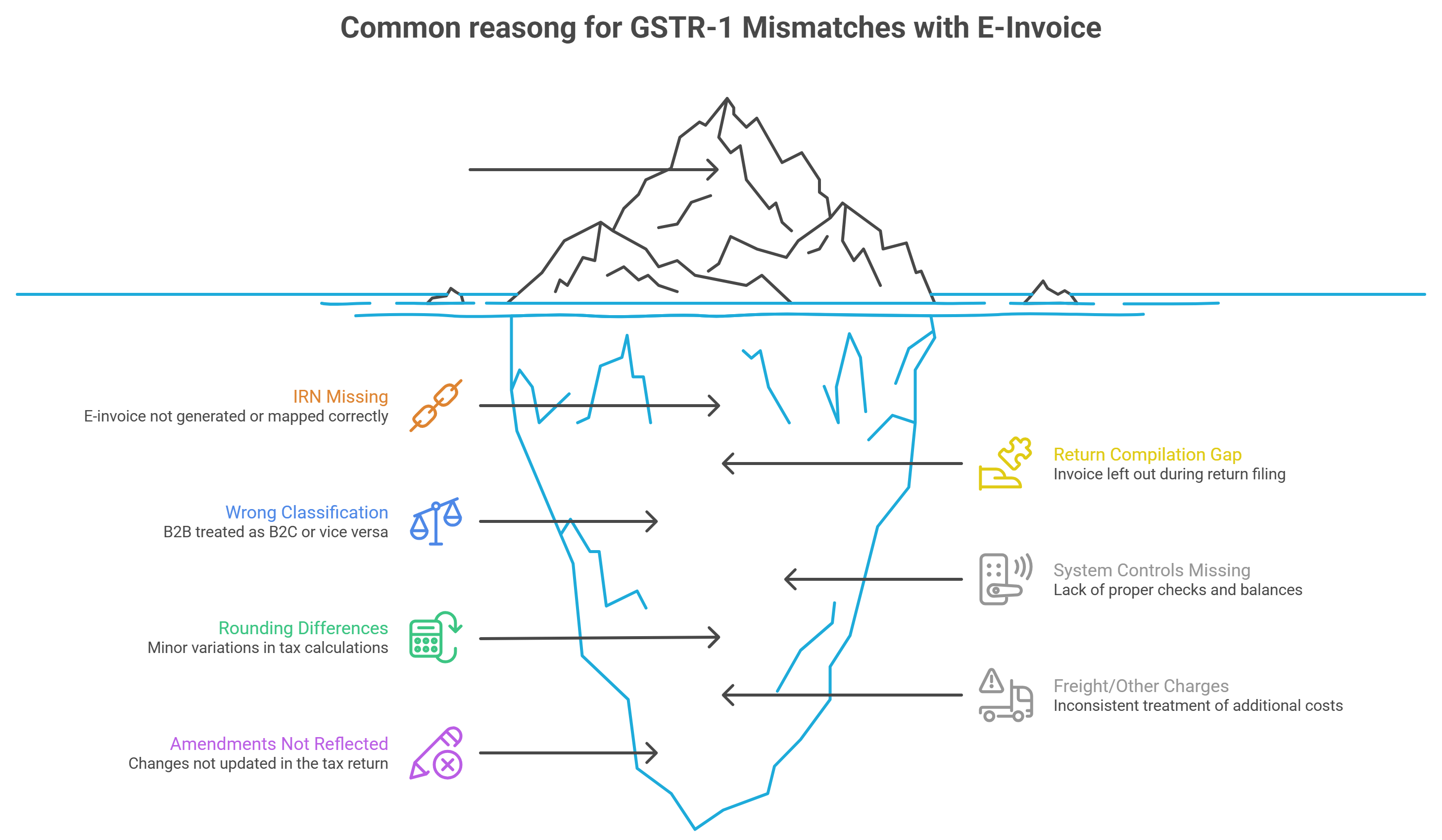
Common reasons for differences
A. IRN exists, GSTR-1 missing
-
Invoice cancelled in ERP but IRN not cancelled (or cancelled late)
-
Invoice falls in one period, but uploaded/reported in another
-
CN/DN generated but mapped wrongly
-
Return compilation gap (invoice left out)
B. GSTR-1 exists, IRN missing
-
IRN required but failed / not generated
-
Wrong classification (B2B treated as B2C or vice versa)
-
System/process controls missing
C. Value / tax mismatch
-
Rounding differences
-
Freight/other charges treated differently
-
Amendments not reflected correctly
How to reconcile (guiding steps)
-
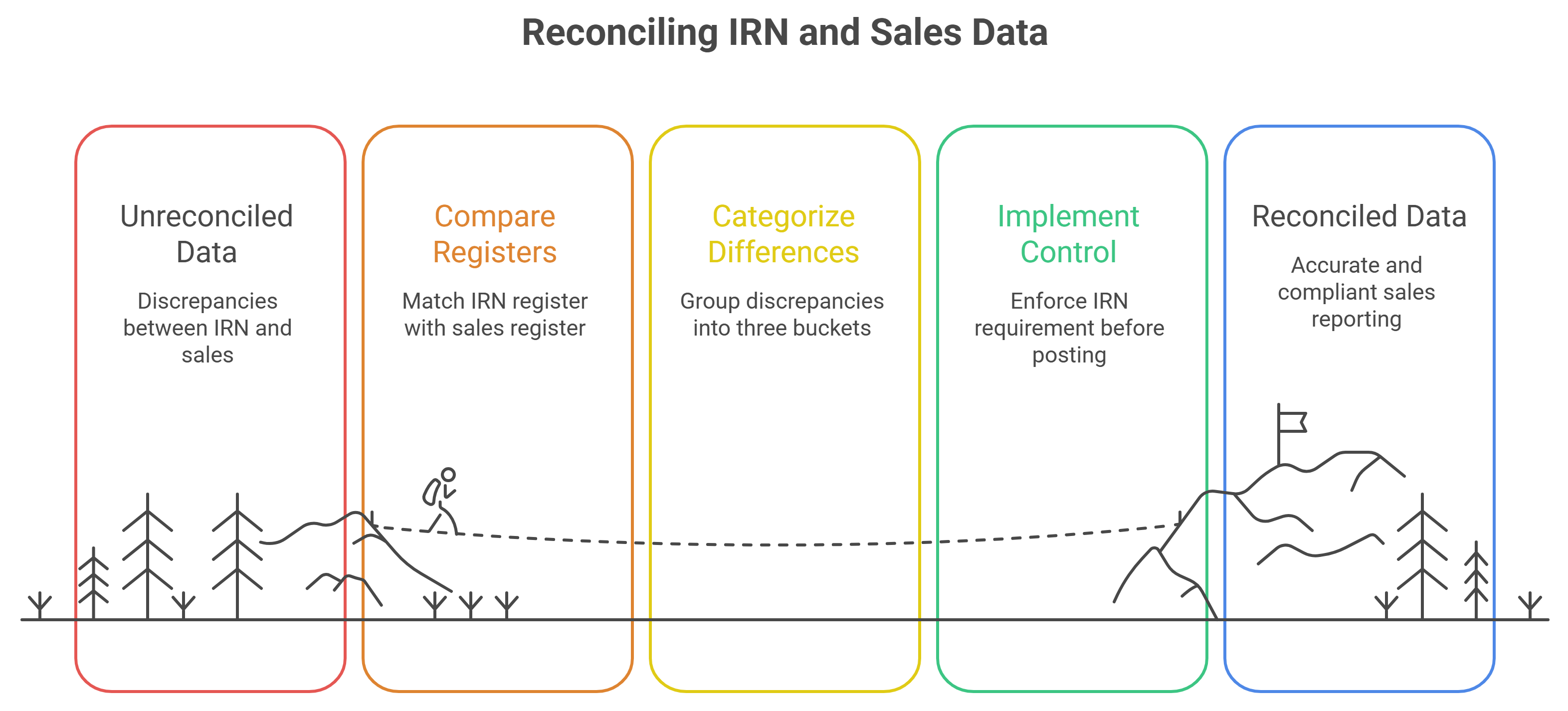
Start with IRN register vs sales register (not return PDF).
-
Create 3 buckets:
-
IRN present, return missing → include via amendment / correct reporting
-
Return present, IRN missing → treat as compliance gap (fix process)
-
Both present, values differ → correct master/tax computation mapping
-
-
Put one hard control going forward:
“If IRN required, invoice cannot be finally posted without IRN.”
3) GSTR-1 vs TDS Statements: Accrual vs Payment
This mismatch is the most misunderstood.
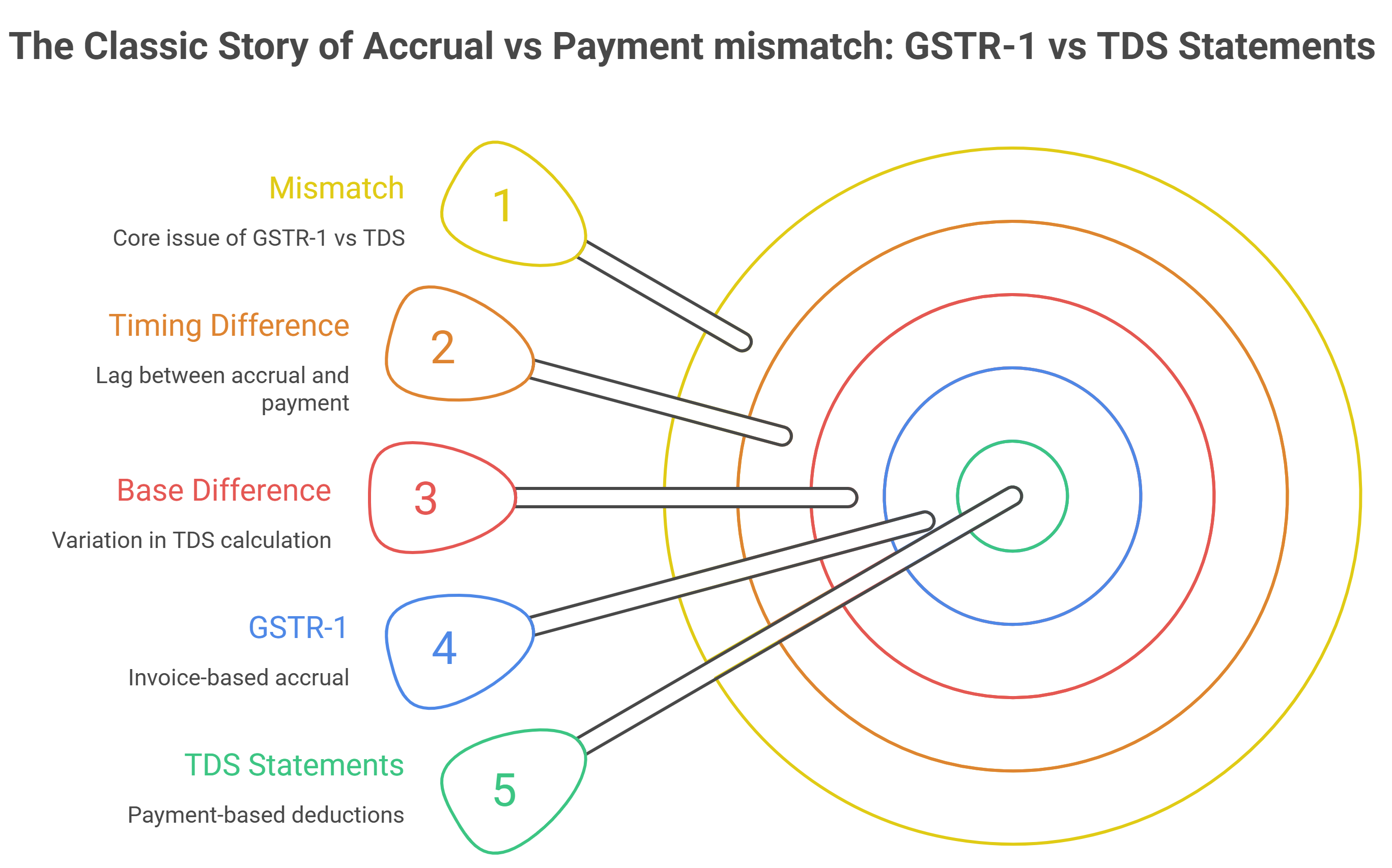
GSTR-1 is invoice-based (accrual).
TDS is payment-based, and customers often compute it differently.
So mismatch is usually not a GST error.
It’s a timing + base difference.
Common reasons for differences
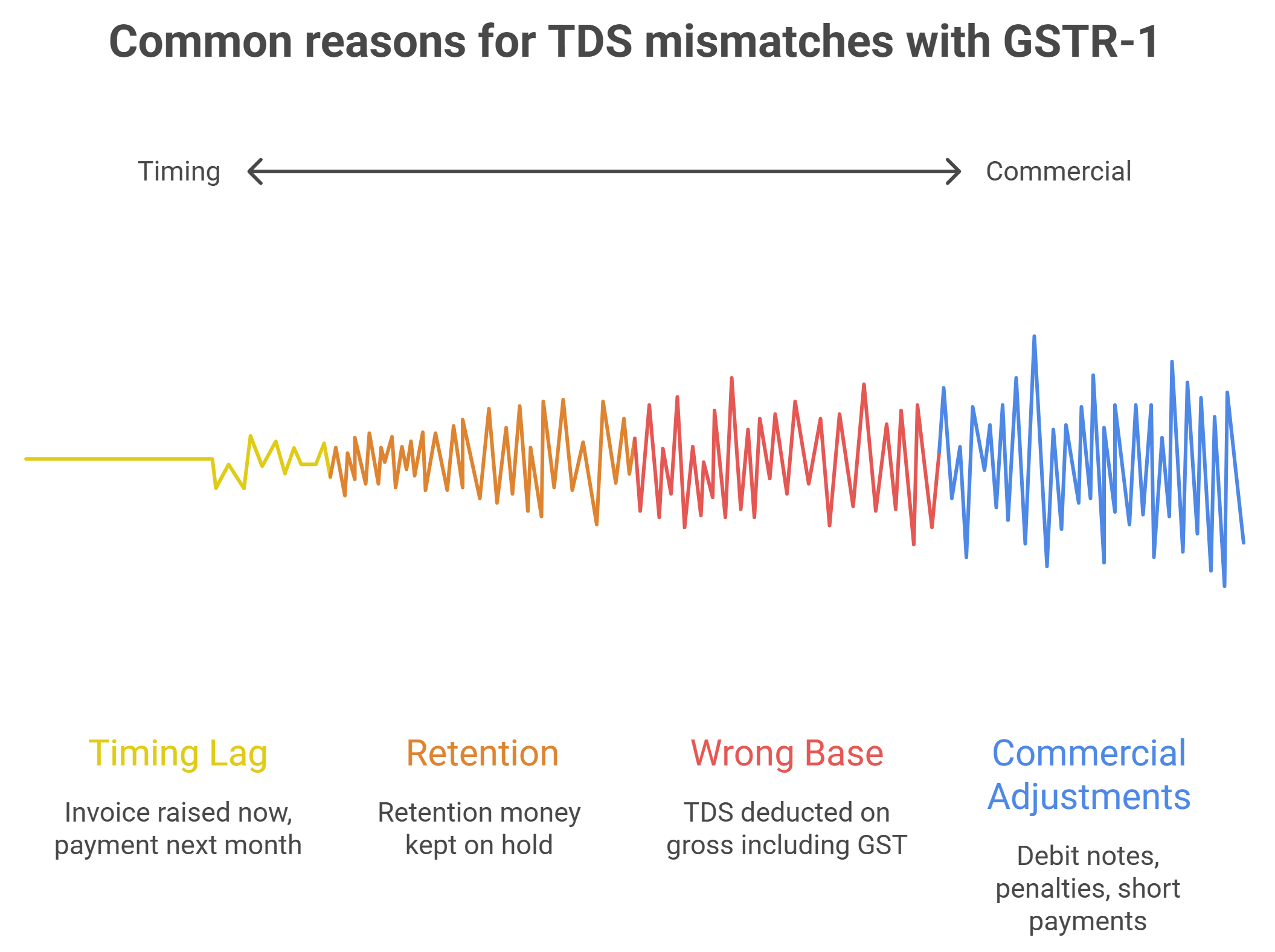
A. Timing lag
-
Invoice raised now, payment next month/quarter
-
Year-end invoices paid next FY
-
Advance received earlier, invoice raised later
B. Retention / milestone holdbacks
-
Retention money kept on hold in turnkey projects
-
Partial payment against full invoice
-
Performance guarantee adjustments
C. Wrong base for TDS
-
Some customers deduct TDS on gross including GST
-
Some on value excluding GST
-
Some deduct on total payment including reimbursables
D. Commercial adjustments
-
Debit notes, penalties, LD, short payments
-
Disputes settled later
How to reconcile (guiding steps)
-
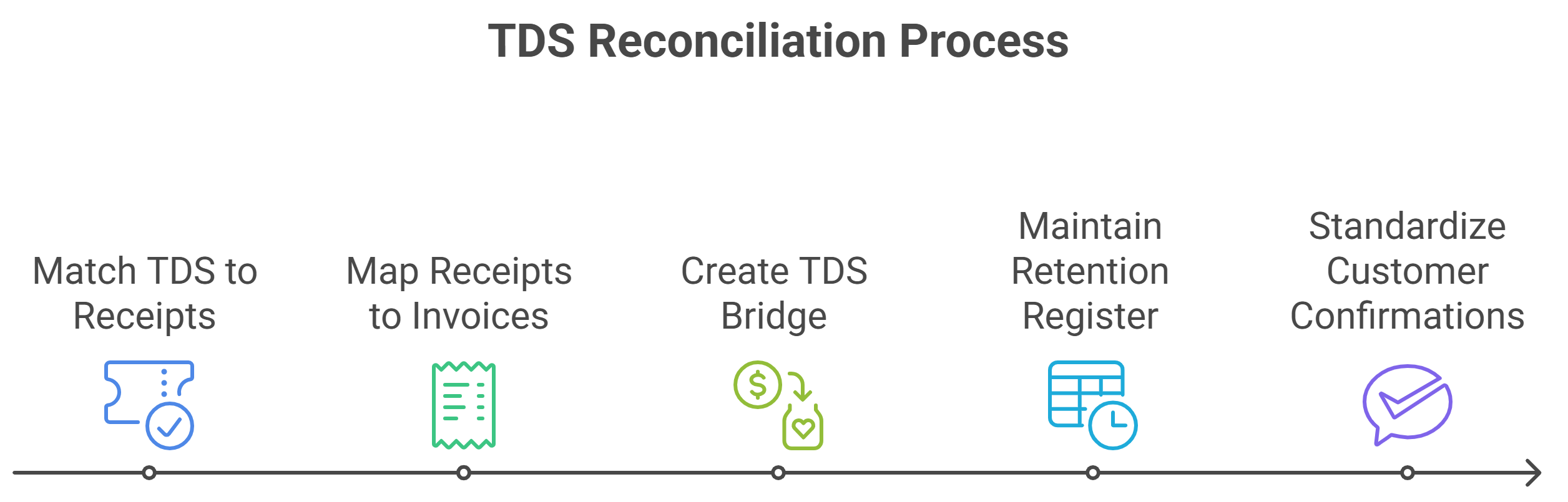
Match TDS to receipts first, not to invoices.
-
Then map receipts to the invoices settled by those receipts.
-
Create a customer-wise “TDS bridge”:
invoice value → receipt → TDS base → GST component → retention. -
For retention-heavy customers, maintain a retention register with expected release dates.
-
Standardise customer confirmations for large accounts:
“invoice list covered in this payment + base used for TDS”.
The One Rule That Makes Reconciliation Easy
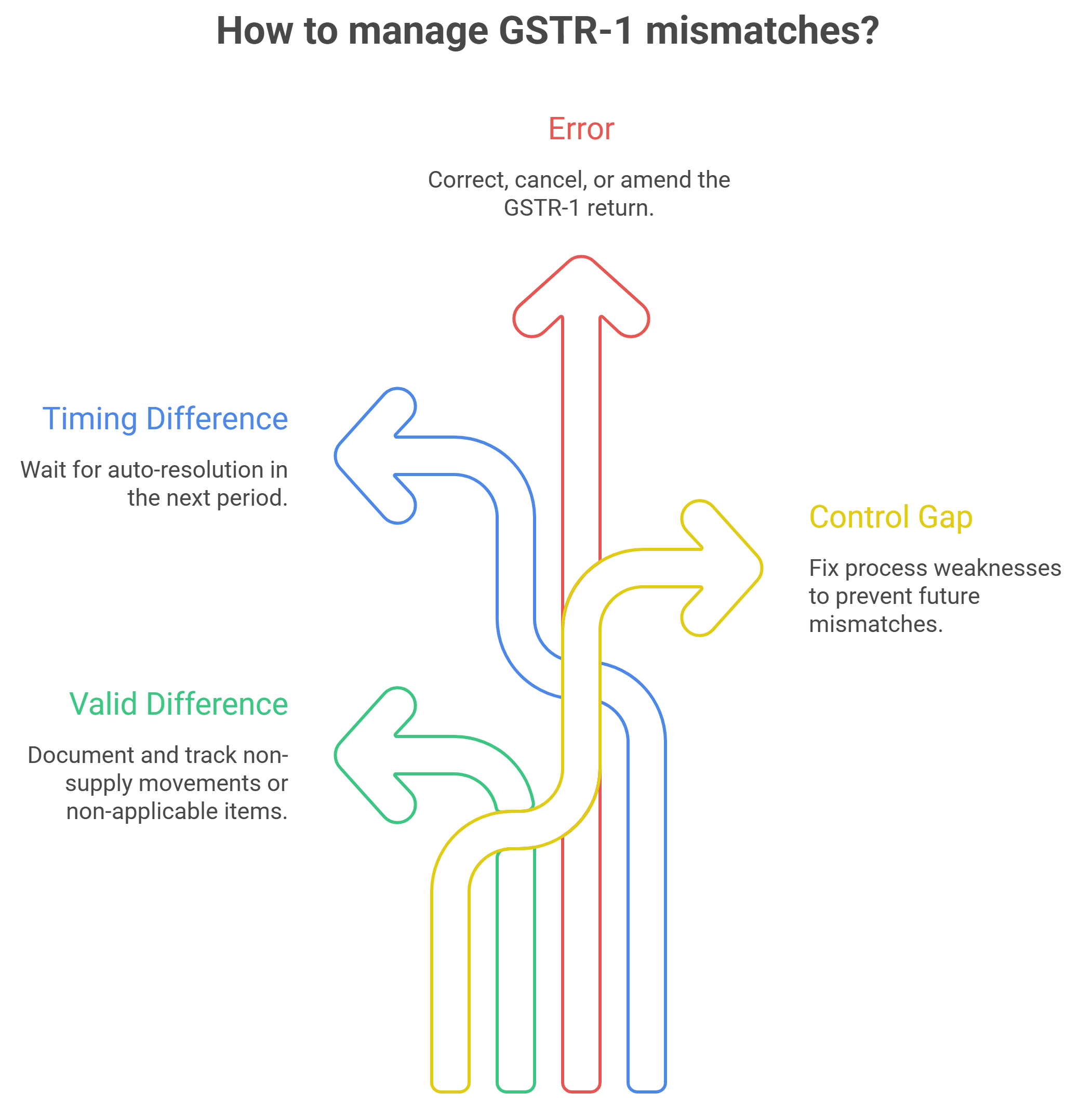
A mismatch becomes manageable only after you label it as one of these:
-
Valid difference (non-supply movement / not applicable)
-
Timing difference (will auto-resolve next period)
-
Error (needs correction / cancellation / amendment)
-
Control gap (process weakness must be fixed to prevent repeats)
Once classified, the action becomes obvious:
-
Document it,
-
Track it, or
-
Correct it.
What CFOs Should Ask Their Team Every Month
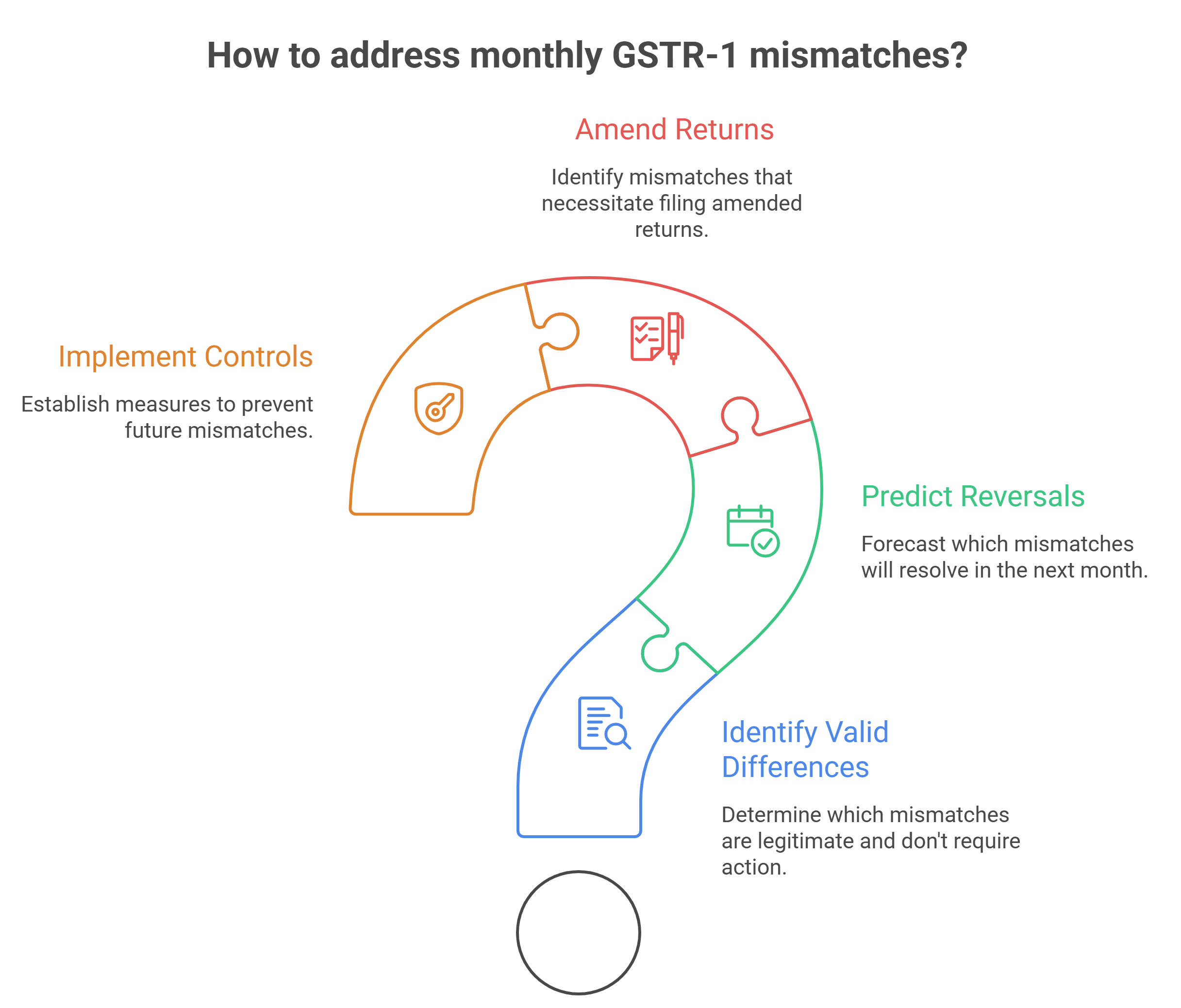
Instead of “why doesn’t it match?”, ask:
-
What % differences are valid vs errors?
-
Which mismatches will reverse next month?
-
Which ones require return amendments?
-
What controls will stop the same mismatch next month?
Need of GST in India | Powers of GST Officers | GST Audit Procedure | GST Audit Procedure | GST penalty under section 74
About the Author

- ★★
- ★★
- ★★
- ★★
- ★★

Check out other Similar Posts

CFO Weekly Digest
A weekly newsletter delivering sharp insights, strategic analysis, and critical updates on business, finance, and compliance — designed exclusively for CFOs and Finance Leaders
Masters India is a GST Suvidha Provider (GSP) appointed by Goods and Services Tax Network (GSTN), a Government of India enterprise.
 Procapitus Business Park, 4th Floor, D 247/4A, Sector 63 Rd, Noida, Uttar Pradesh 201301
 info@mastersindia.co




Certified