Masters India
Masters India
Products
Tools
Resources
Company

Chapter 2: Compulsory Registration (Section 24)

Compulsory Registration (Section 24)

Introduction to Compulsory Registration
Introduction to Compulsory Registration

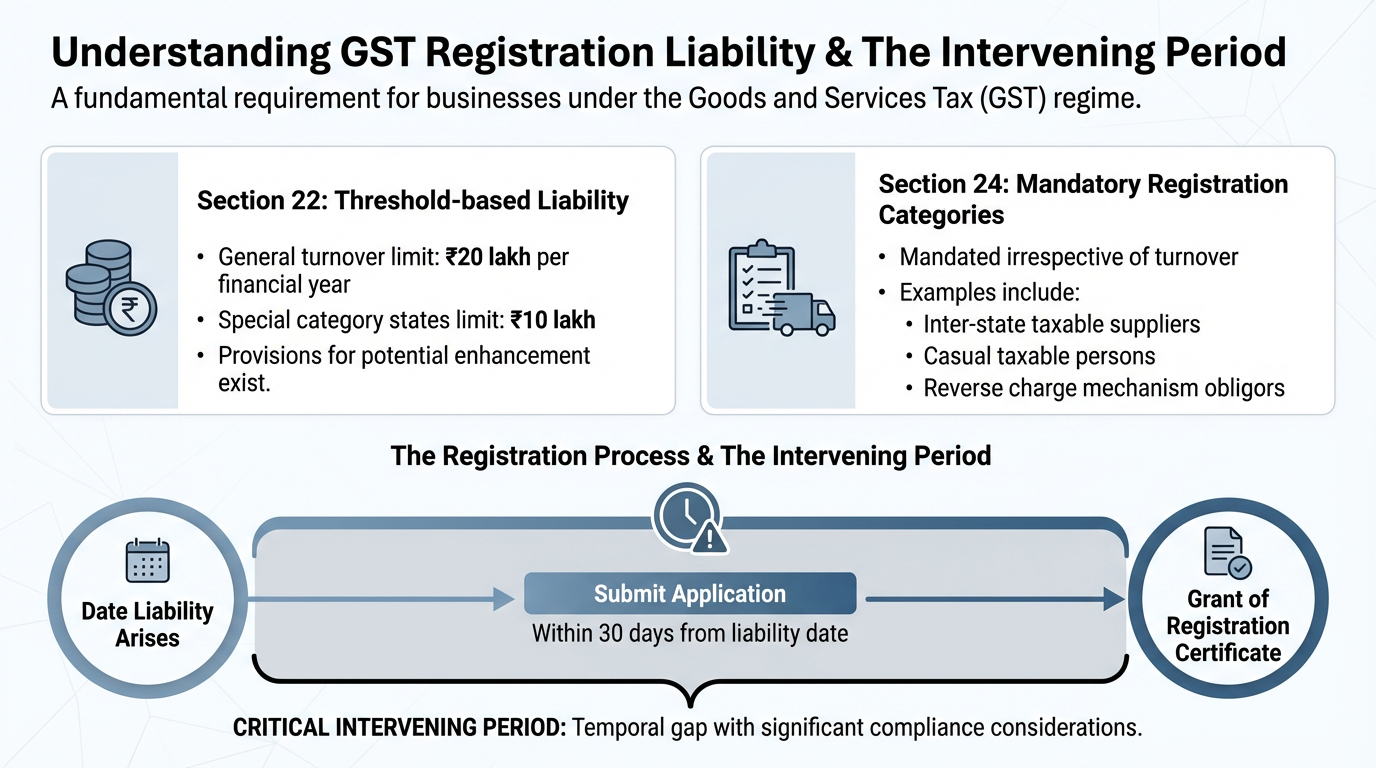
Under the Goods and Services Tax (GST) law, registration is a fundamental legal requirement for specific individuals and entities under particular circumstances. While many businesses register based on turnover thresholds as outlined in Section 22, Section 24 delineates scenarios where registration becomes compulsory, irrespective of the aggregate turnover. This provision ensures that certain activities and roles, deemed critical for effective tax administration, are brought within the GST framework from their inception. The scope of compulsory registration extends to inter-state taxable supplies, casual taxable persons, liabilities under the Reverse Charge Mechanism (RCM), non-resident taxable persons, and other related roles such as tax deductors and agents. This section consolidates these mandatory registration circumstances and explores their practical implications for taxpayers.
Key Scenarios Mandating Compulsory Registration

Key Scenarios Mandating Compulsory Registration

Section 24 specifies several scenarios that necessitate compulsory GST registration:

Inter-State Taxable Supplies

Inter-State Taxable Supplies

Any person making inter-state taxable supplies of goods or services is required to register in the State or Union Territory from which these supplies originate. This applies regardless of whether their aggregate turnover crosses the normal threshold, ensuring comprehensive accounting and compliance for cross-jurisdictional transactions.

Casual Taxable Persons

Casual Taxable Persons

Individuals or entities identified as casual taxable persons, who occasionally engage in business and make taxable supplies, must obtain registration irrespective of their turnover. This measure aims to integrate such temporary business activities into the formal GST regime for proper monitoring and regulation.

Persons Liable to Pay Tax Under Reverse Charge Mechanism (RCM)

Persons Liable to Pay Tax Under Reverse Charge Mechanism (RCM)

Any person obligated to pay tax under the RCM provisions is mandatorily required to register, irrespective of their turnover. RCM liabilities arise when the recipient, rather than the supplier, is responsible for paying the tax, or for specific categories of supplies designated under this mechanism.

Non-Resident Taxable Persons

Non-Resident Taxable Persons

Non-resident taxable persons intending to make taxable supplies in India are required to obtain compulsory registration. This facilitates the collection and remittance of tax, filing of returns, and overall GST compliance for foreign entities operating within India.

Persons Required to Deduct Tax Under Section 51

Persons Required to Deduct Tax Under Section 51

Entities mandated to deduct tax at source (TDS) under Section 51 must obtain registration, even if their turnover would not ordinarily require it. This ensures that tax deduction and remittance activities are conducted within the GST compliance framework.

Agents Making Taxable Supplies on Behalf of Other Taxable Persons

Agents Making Taxable Supplies on Behalf of Other Taxable Persons

Individuals or entities acting as agents, or in similar capacities, who make taxable supplies on behalf of other registered taxpayers, are required to be registered. This provision ensures proper tax collection and accountability in intermediary supply arrangements.

Input Service Distributor (ISD)

Input Service Distributor (ISD)

An Input Service Distributor, irrespective of whether they are separately registered under the Act, must obtain registration if they distribute input services within the tax system. The ISD mechanism is crucial for allocating input tax credit to various registered units, and registration ensures proper tracking and credit flow.

Notes on Scope and Cross-Reference

Notes on Scope and Cross-Reference

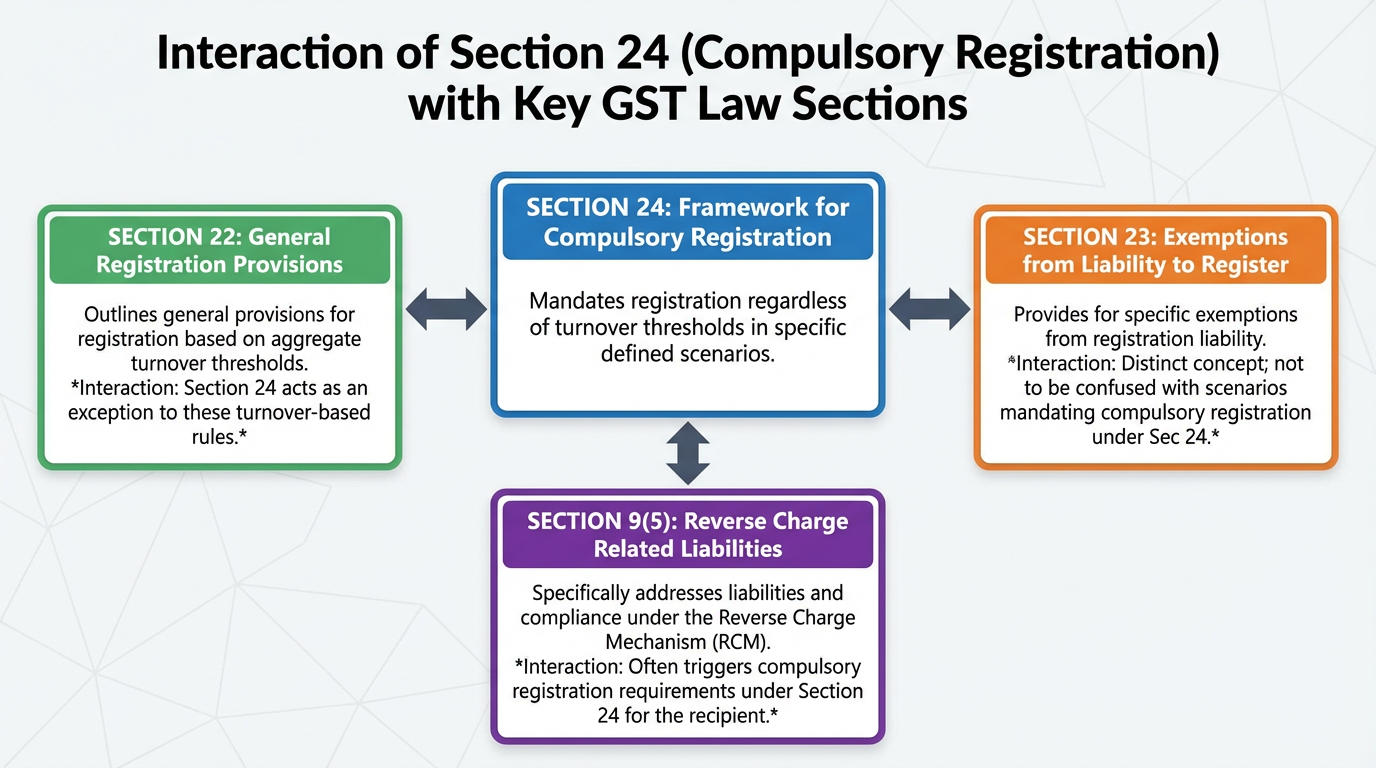
The framework for compulsory registration under Section 24 interacts with other critical sections of the GST law:

Section 22: This section outlines the general provisions for registration based on turnover thresholds.

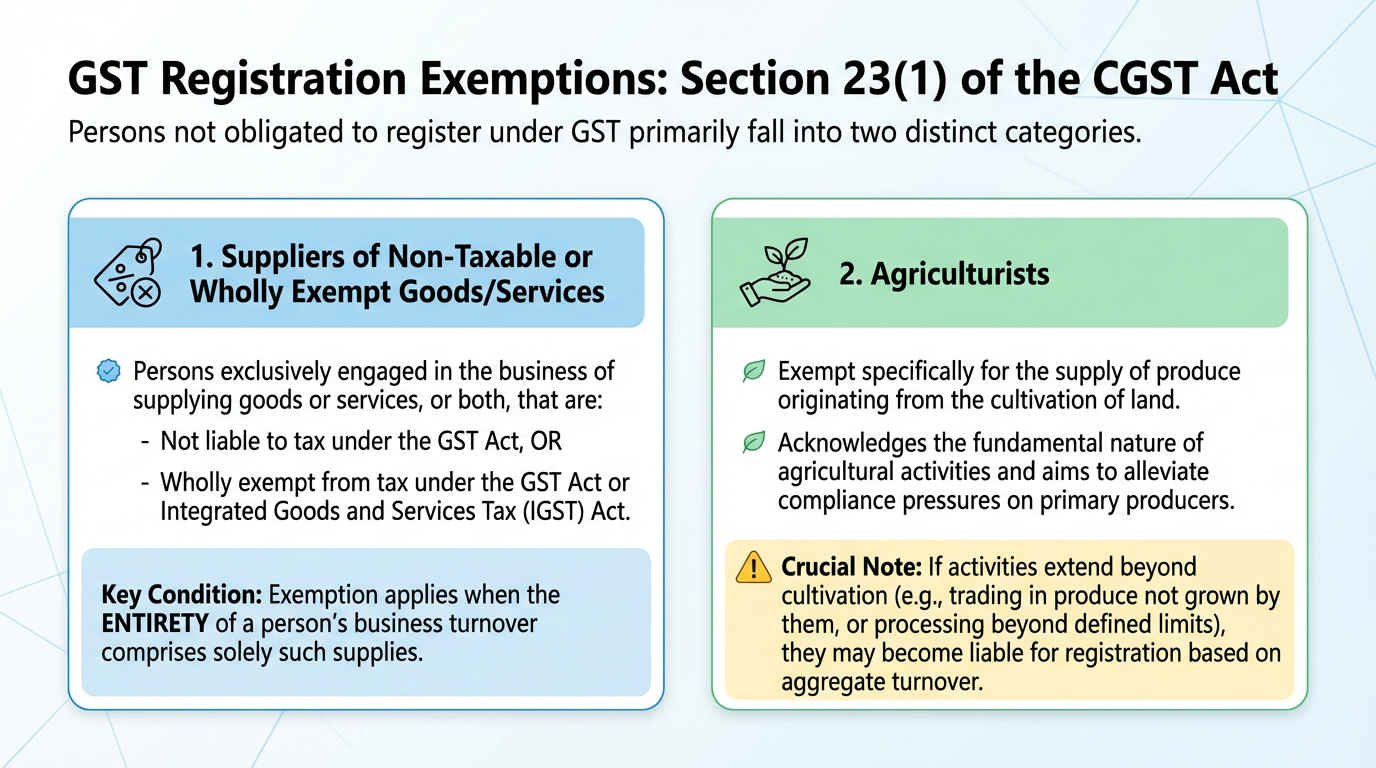
Section 23: This section provides for exemptions from the liability to register, which should not be confused with the scenarios mandating compulsory registration.

Section 9(5): This section specifically addresses reverse charge related liabilities and compliance requirements.

Practical Implications and Processes

Practical Implications and Processes

Understanding the practical implications of compulsory registration is vital for compliance:

Timeframes for Registration

Timeframes for Registration

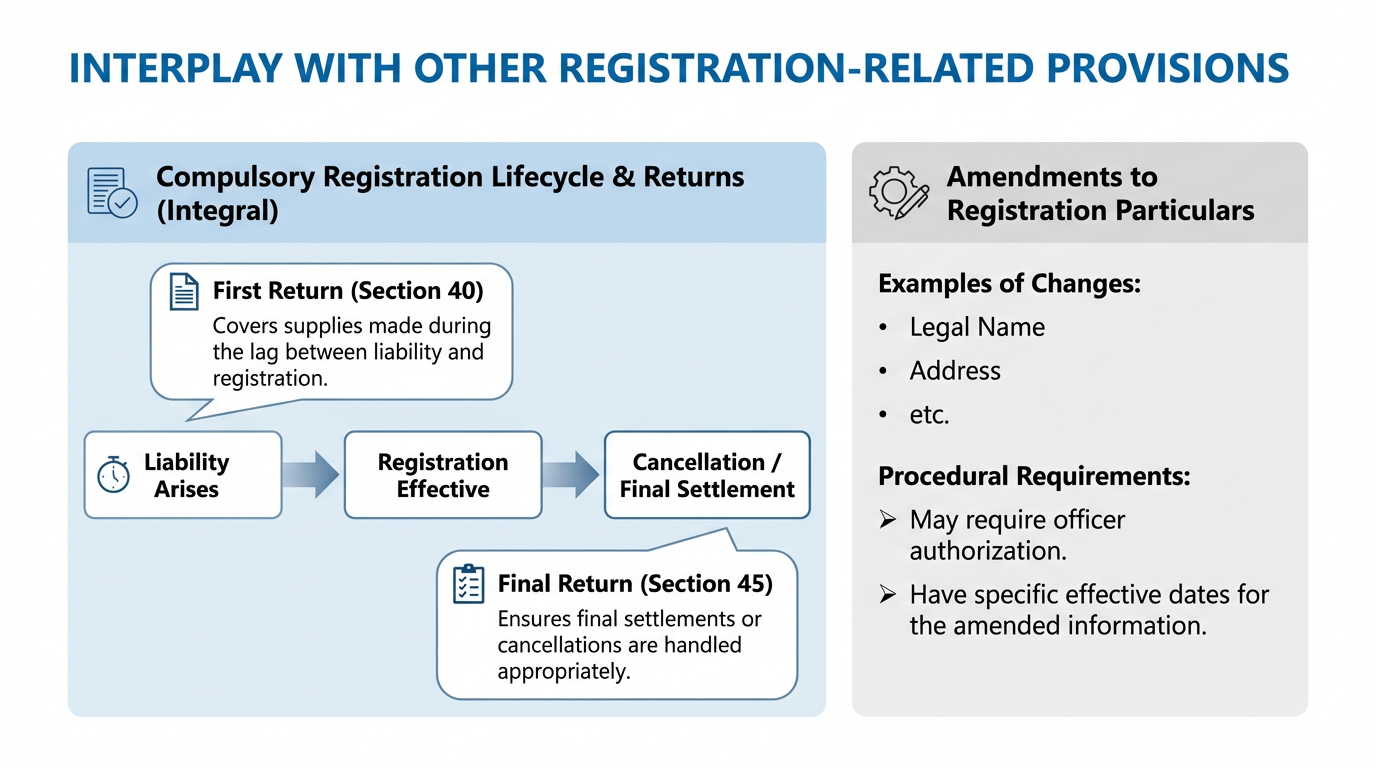
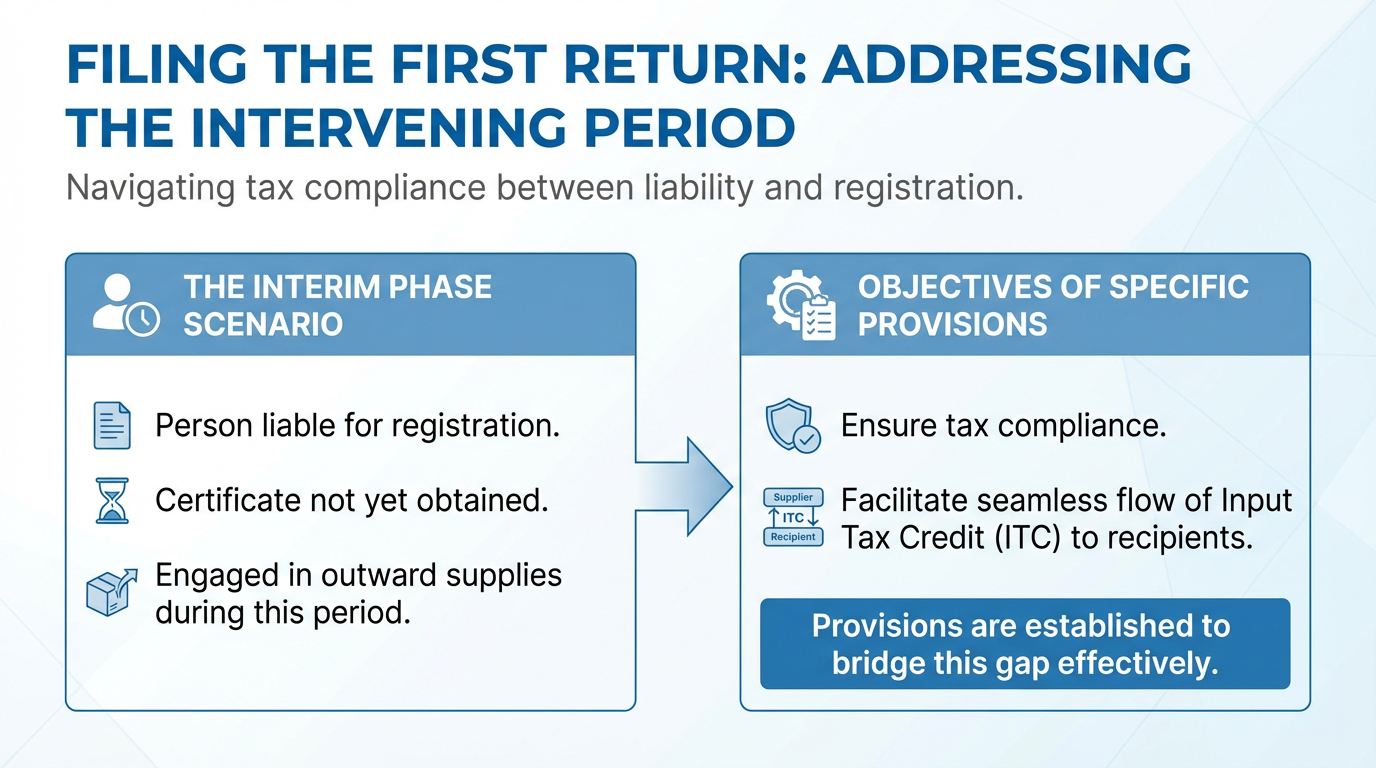
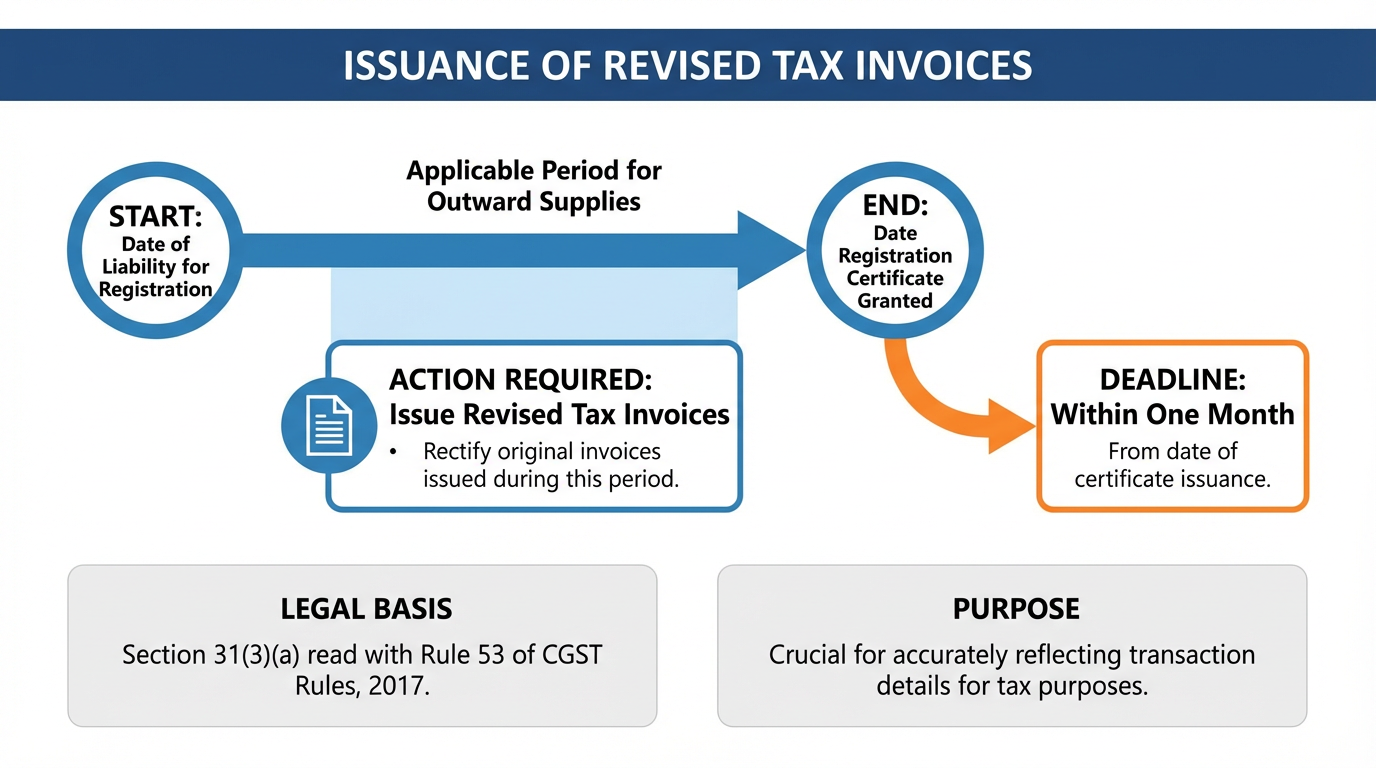
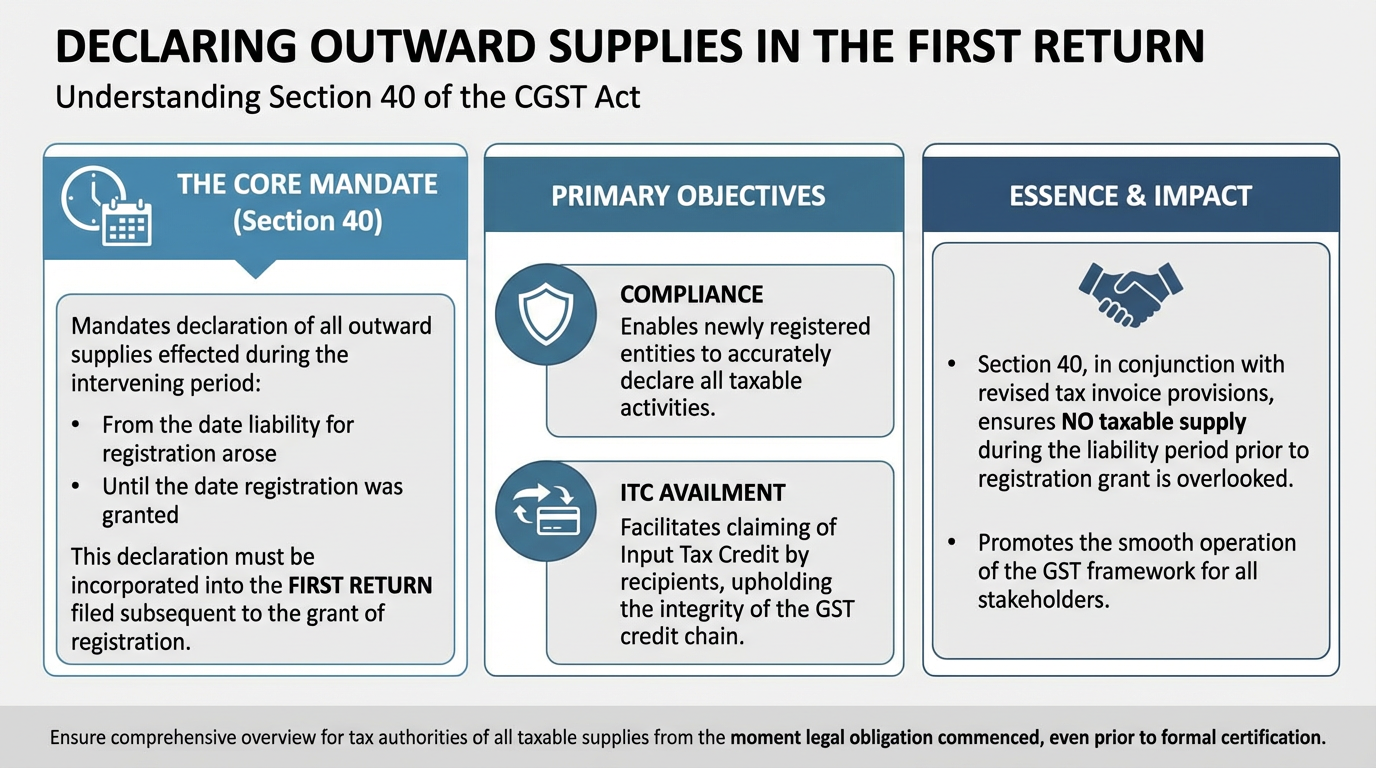
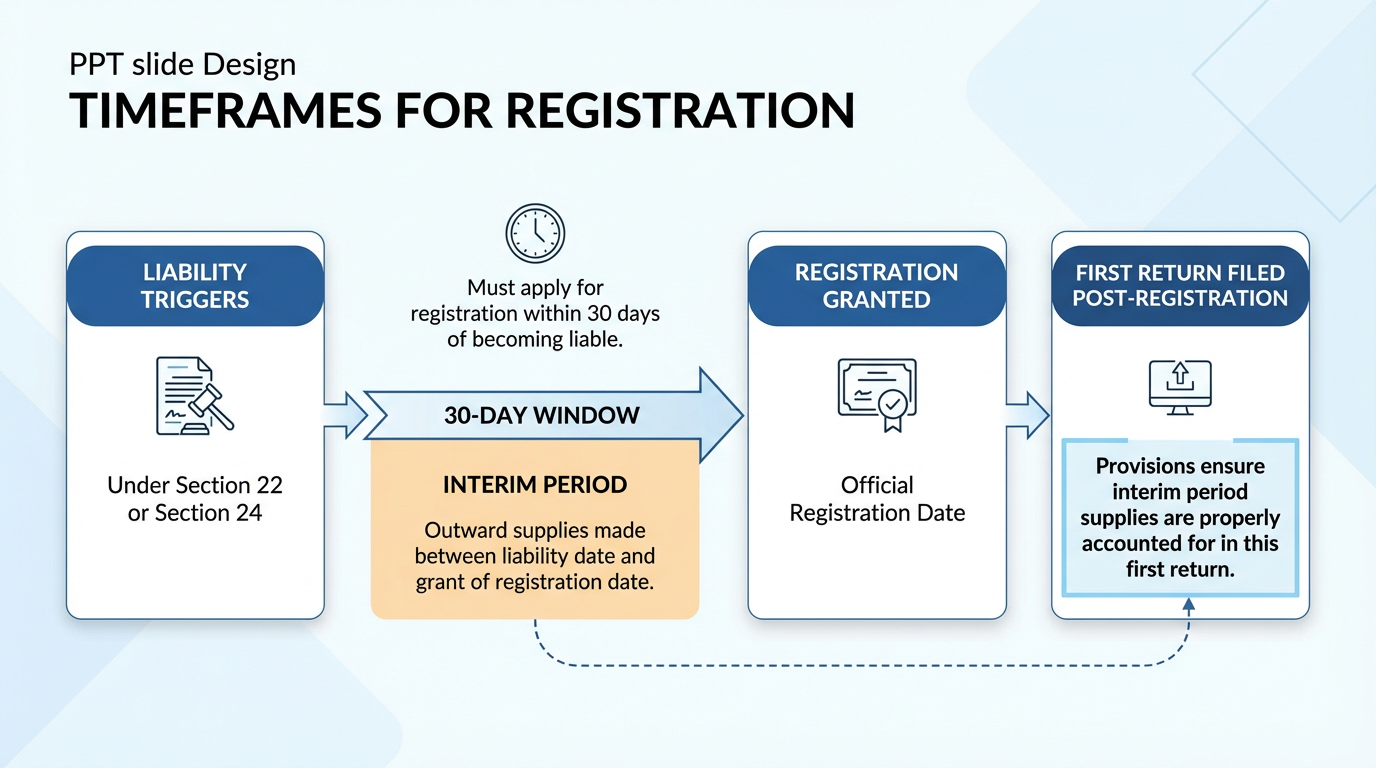
Upon becoming liable for registration under Section 22 or Section 24, a person must apply for registration within 30 days. Provisions exist to ensure that outward supplies made during the interim period between becoming liable and the grant of registration are properly accounted for in the first return filed post-registration.

Transitional and Amendment Considerations

Transitional and Amendment Considerations

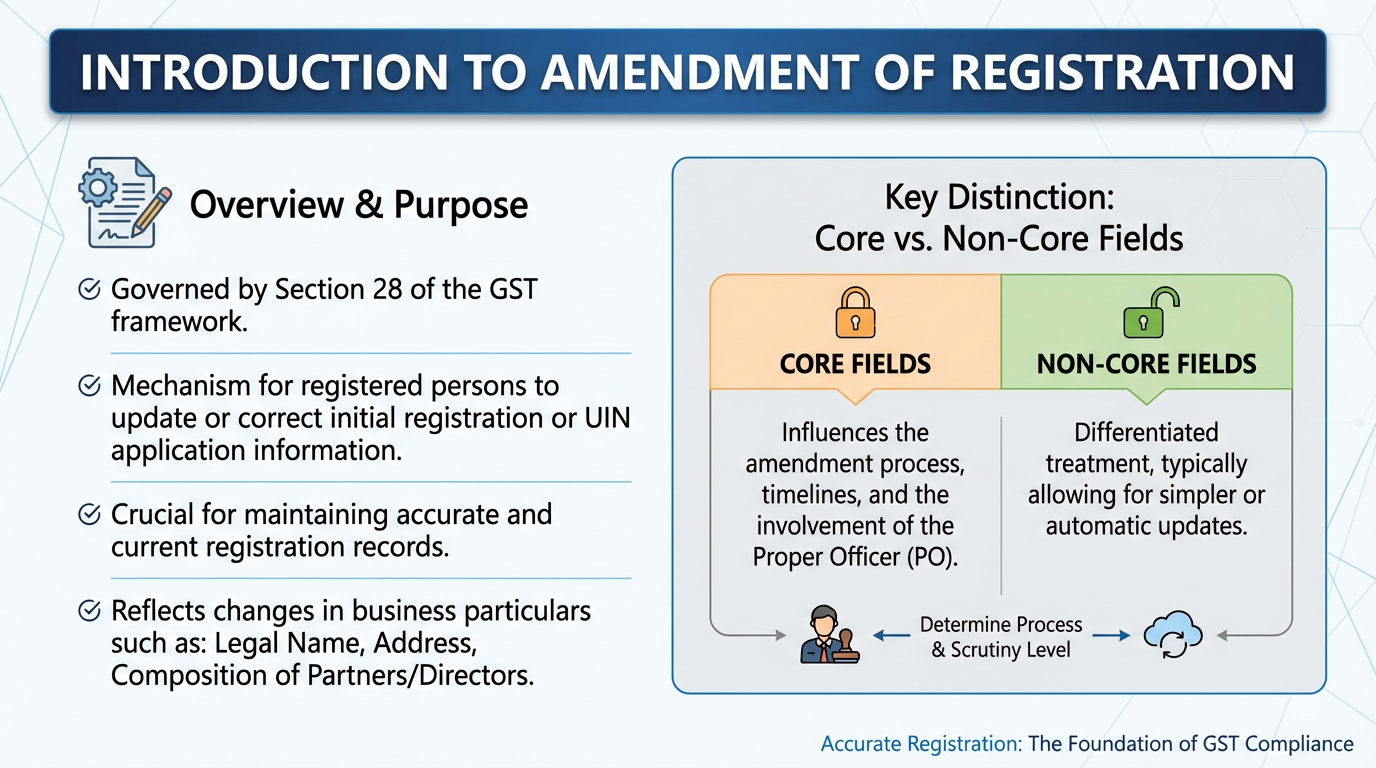
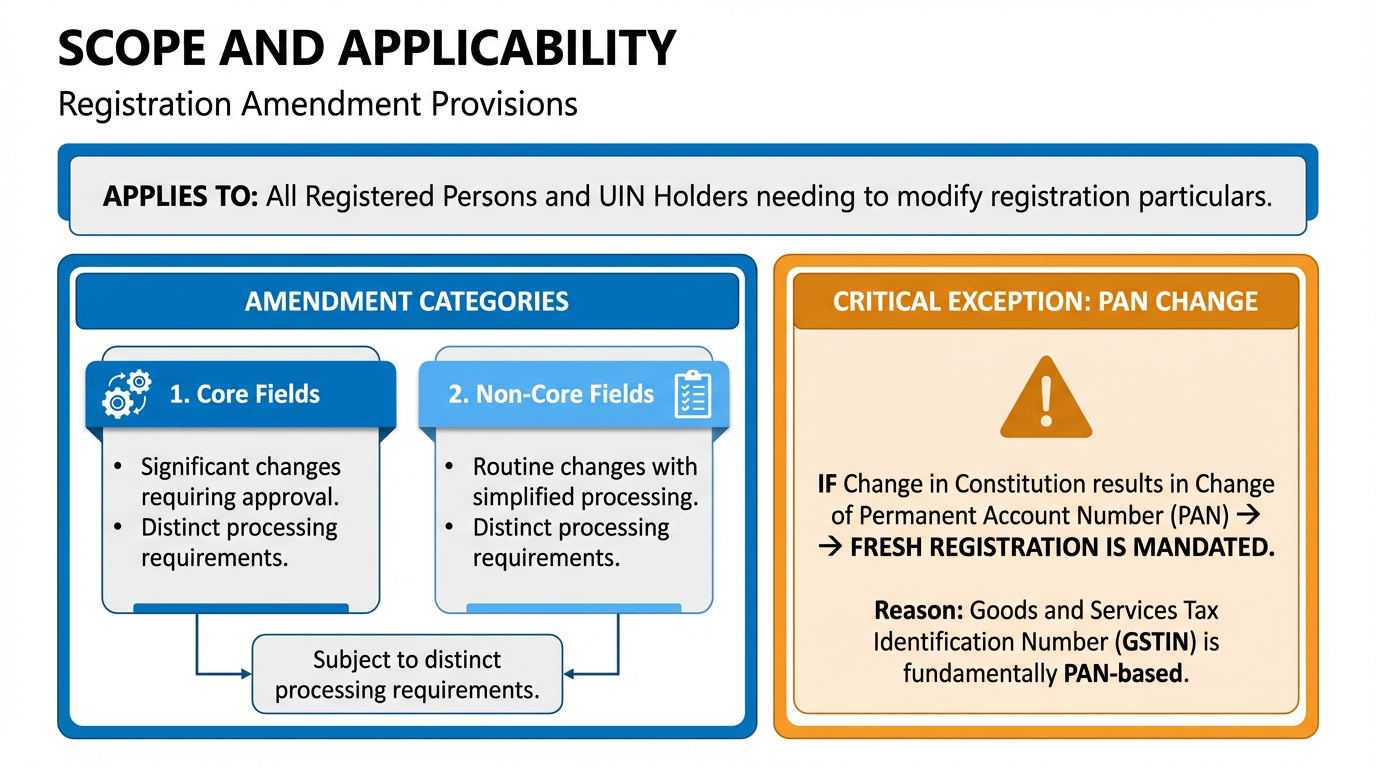
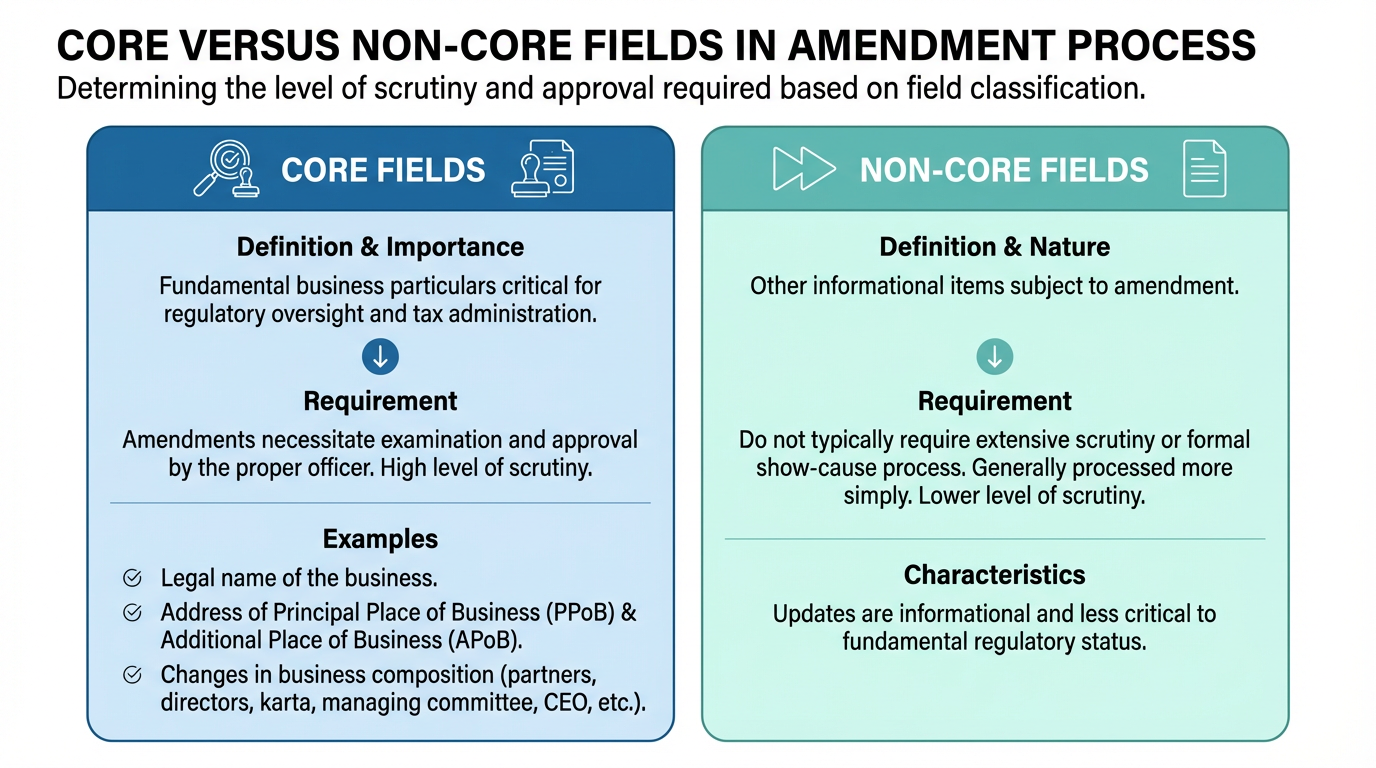
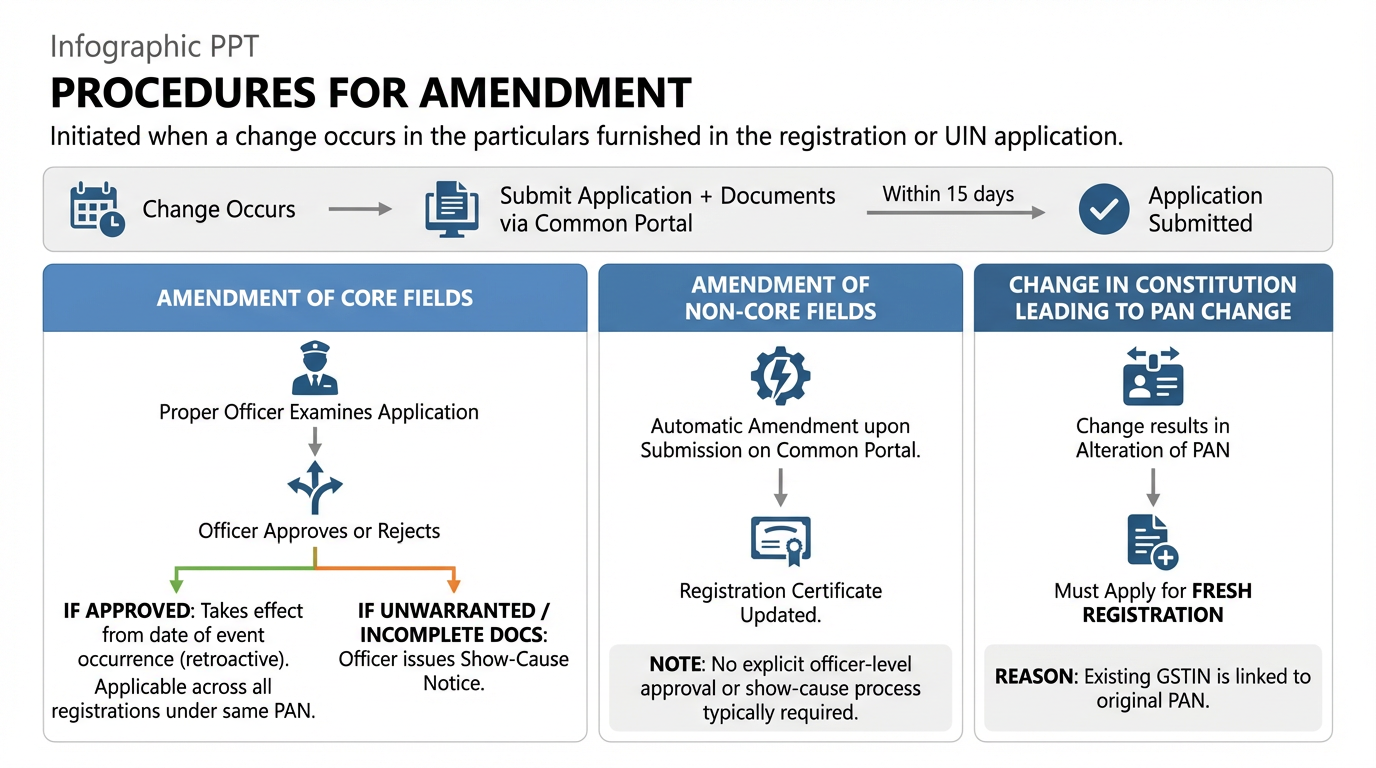
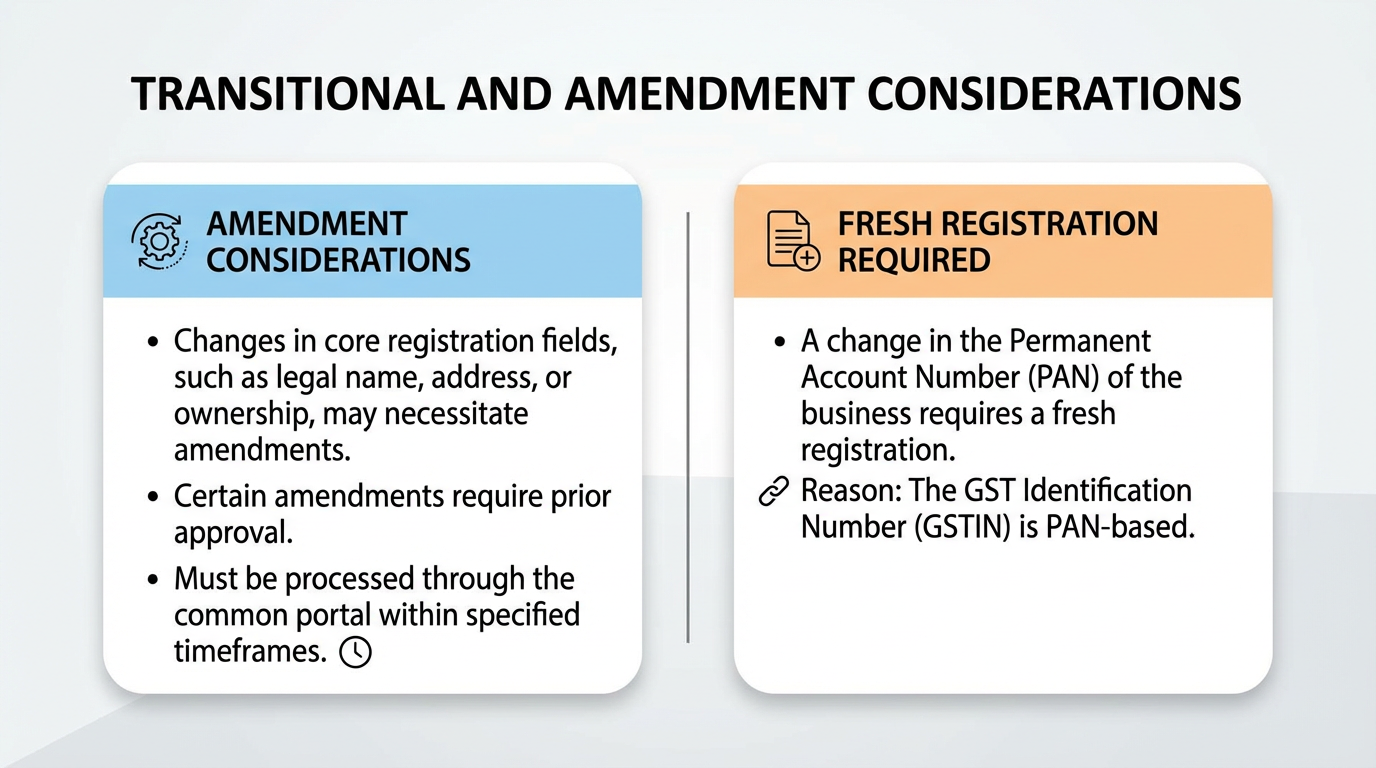
Changes in core registration fields, such as legal name, address, or ownership, may necessitate amendments. Certain amendments require prior approval and must be processed through the common portal within specified timeframes. A change in the Permanent Account Number (PAN) of the business, however, requires a fresh registration, as the GST Identification Number (GSTIN) is PAN-based.

Consequences of Non-Registration

Consequences of Non-Registration

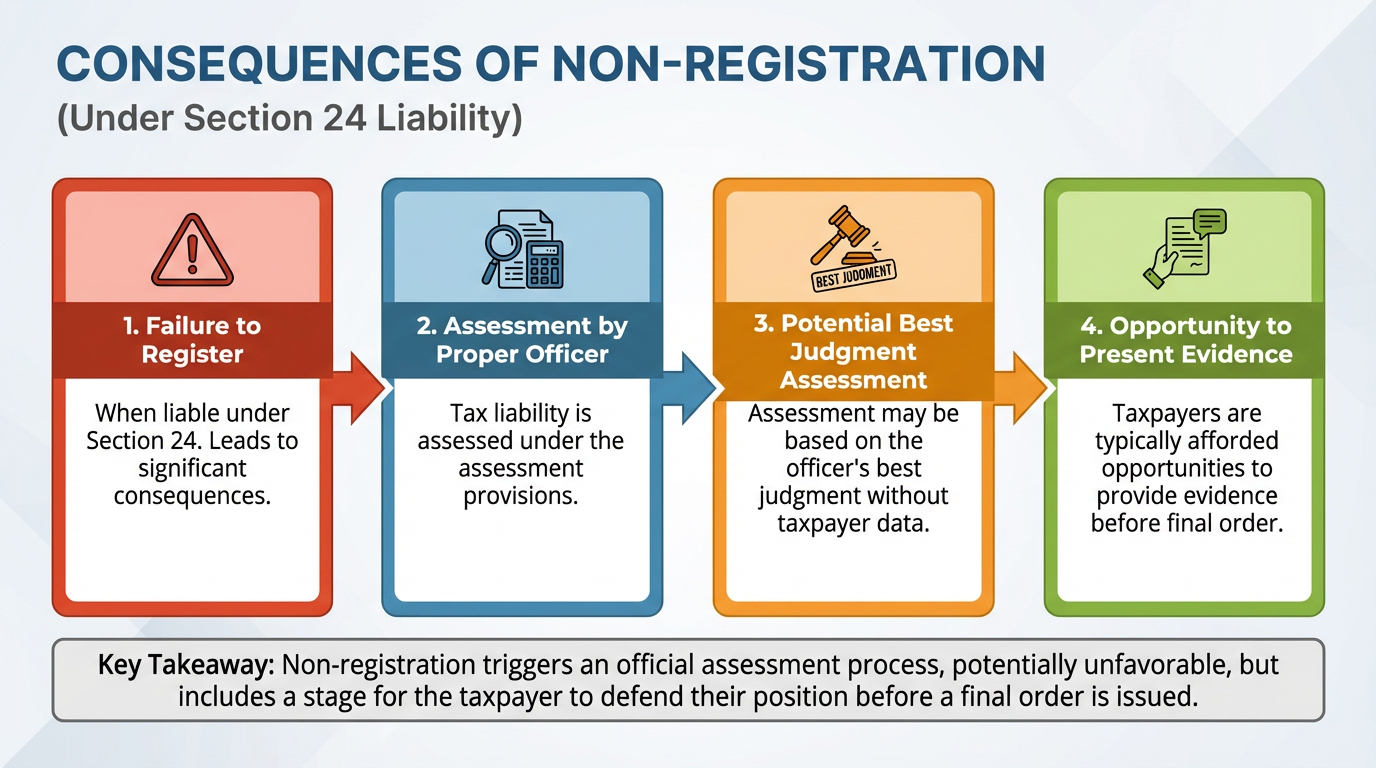
Failure to register when liable under Section 24 can lead to significant consequences. The proper officer may assess tax liability under the assessment provisions, potentially based on a best judgment assessment. Taxpayers are typically afforded opportunities to present evidence before a final assessment order is issued.

Intra- and Inter-State Compliance

Intra- and Inter-State Compliance

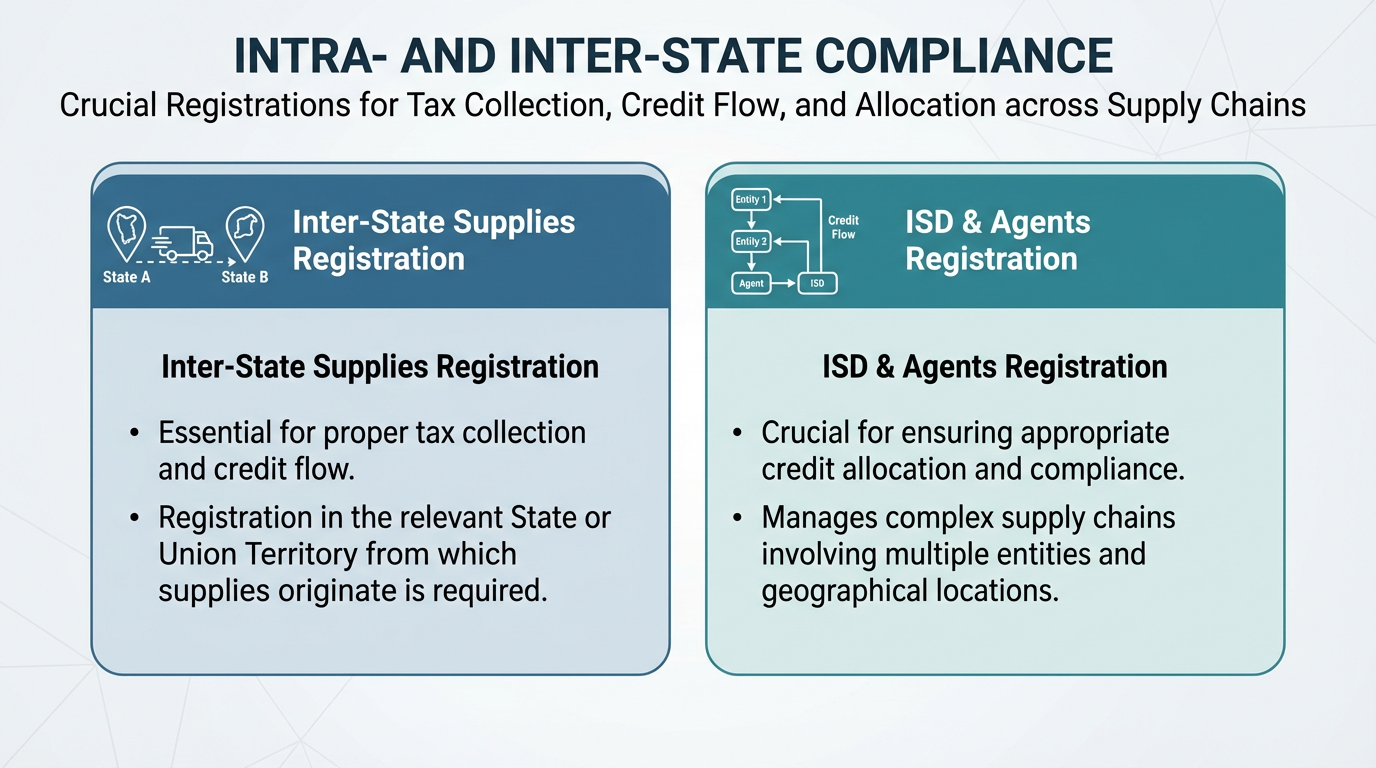
For inter-state supplies, registration in the relevant State or Union Territory from which supplies originate is essential for proper tax collection and credit flow. Registrations related to ISDs and agents are crucial for ensuring appropriate credit allocation and compliance across complex supply chains involving multiple entities and geographical locations.

Summary of Compulsory Registration Categories

Summary of Compulsory Registration Categories

The following categories of persons fall under compulsory registration:

Category
Inter-State taxable suppliers
Casual taxable persons making taxable supplies
Persons liable to pay tax under Reverse Charge
Non-resident taxable persons making taxable supplies
Persons required to deduct tax under Section 51
Persons who make taxable supplies on behalf of other taxable persons (agents)
Input Service Distributors (ISD)

Key Takeaways for Tax Experts

Key Takeaways for Tax Experts

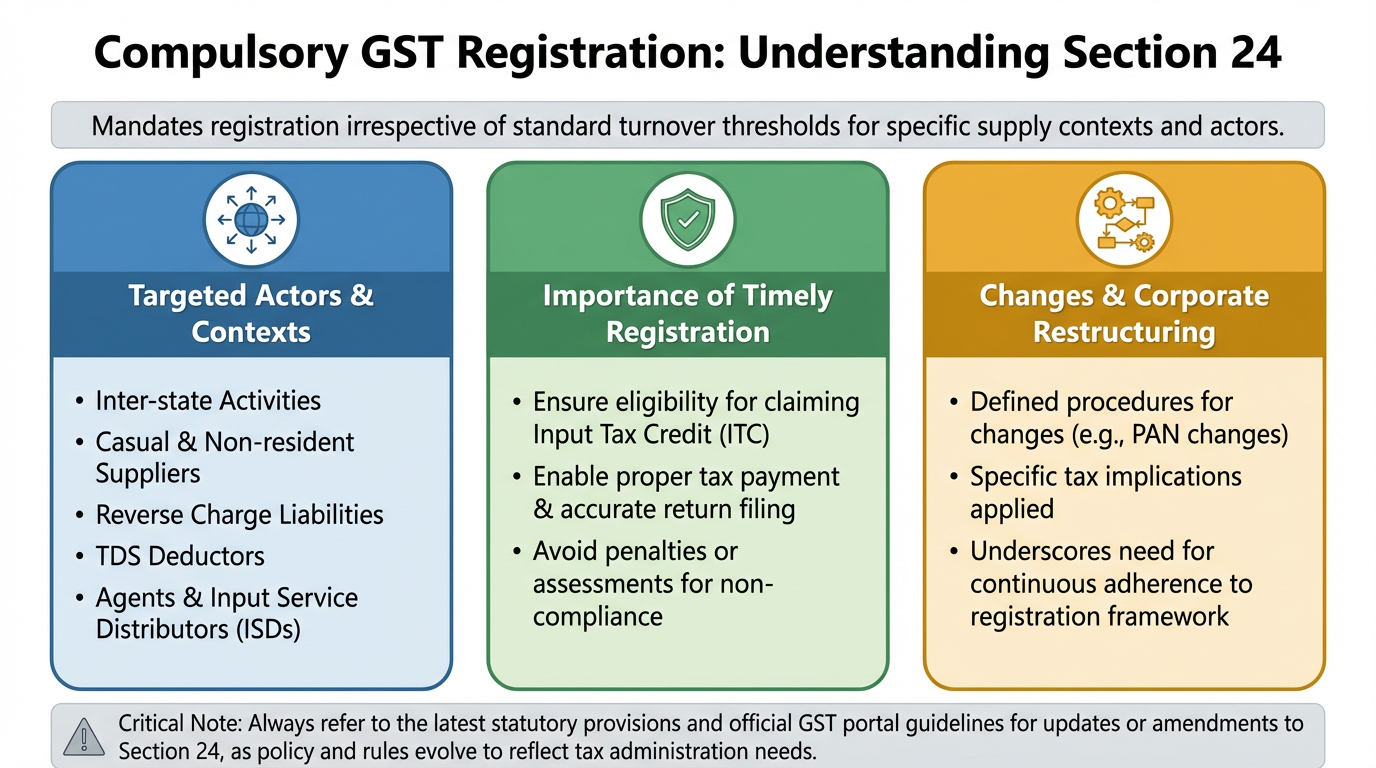
Compulsory registration under Section 24 specifically targets supply contexts and actors that necessitate GST registration irrespective of standard turnover thresholds. This includes inter-state activities, casual and non-resident suppliers, reverse charge liabilities, TDS deductors, agents, and ISDs.

Timely registration is paramount to ensure eligibility for claiming Input Tax Credit (ITC), proper tax payment, accurate return filing, and to avoid penalties or assessments for non-compliance.

Changes in registration and corporate restructurings, such as PAN changes, have defined procedures and tax implications, underscoring the need for continuous adherence to the GST registration framework.

Always refer to the latest statutory provisions and official GST portal guidelines for any updates or amendments to Section 24 and related sections, as policy and rules can be amended to reflect evolving tax administration needs.

Rate this chapter

0.00 / 5. Vote count: 0

Leave a comment