
GST Refund Limitation Period: Rules, Relevant Dates & Exceptions

GST refund claims are subject to specific limitation periods, relevant dates, and procedural conditions under the GST framework. While the general rule provides a two-year window for filing a refund application, the applicable timeline varies depending on the nature of the claim. This guide explains the GST refund limitation period, how the relevant date is determined, key exclusions and exceptions, and special provisions that taxpayers should consider before filing a claim.
What is the GST refund limitation period under Section 54?
Under Section 54(1) of the CGST Act, any person claiming a refund of tax, interest, or any other amount paid must file an application before the expiry of two years from the "relevant date". If the application is filed beyond this two-year window, it is considered time-barred and will generally be rejected.
What is the relevant date for a GST refund claim?
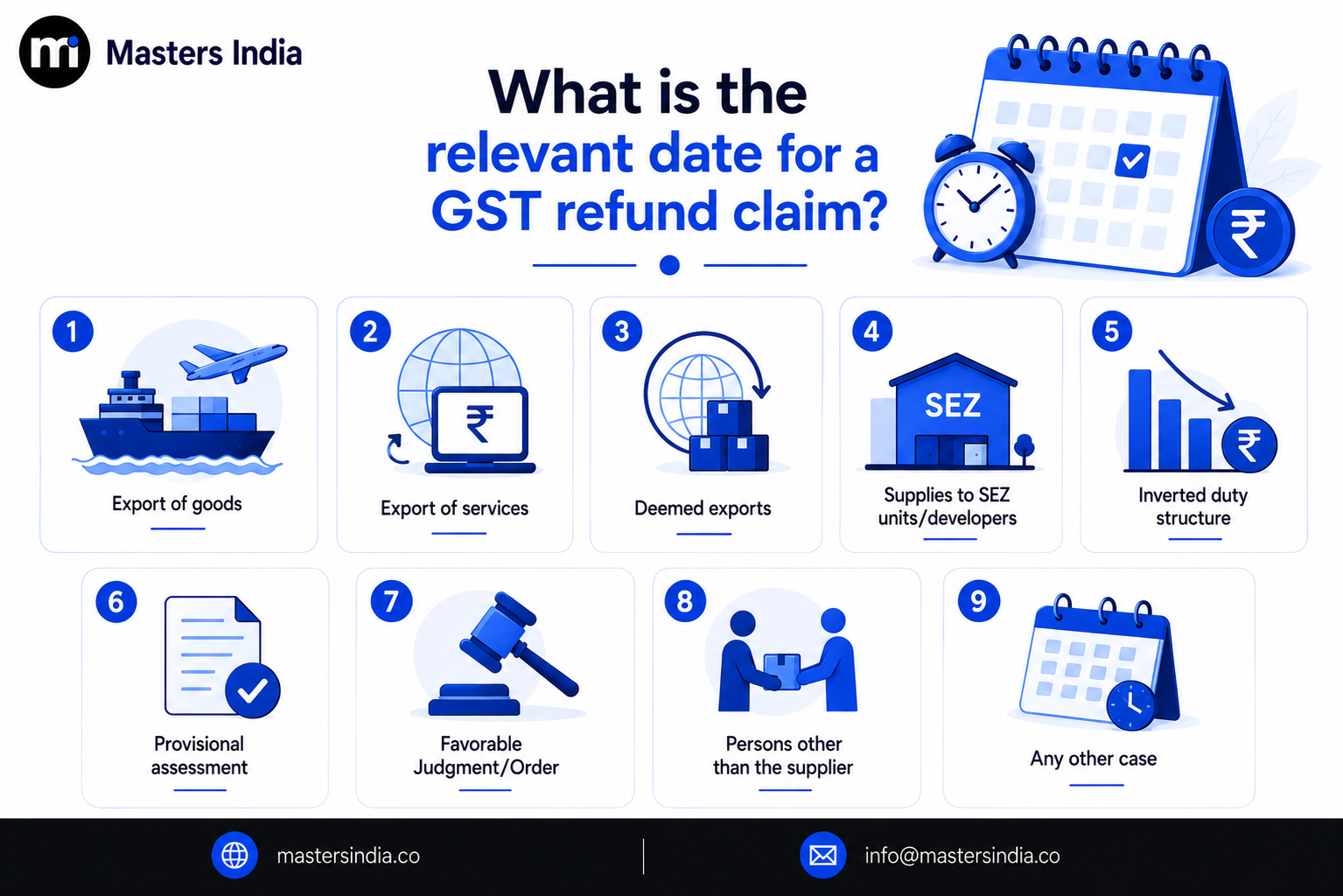 The start of the two-year limitation period (the relevant date) depends entirely on the nature of the refund claim:
- Export of goods:
- By Sea/Air: The date the ship or aircraft leaves India.
- By Land: The date the goods pass the customs frontier.
- By Post: The date of dispatch by the post office to a place outside India.
- Export of services: The date of receipt of payment in convertible foreign exchange (or Indian Rupees where permitted). If payment was received in advance, it is the date the invoice is issued.
- Deemed exports: The date on which the return relating to the deemed exports is furnished.
- Supplies to SEZ units/developers: The due date for furnishing the return (under Section 39) in respect of those supplies.
- Inverted duty structure: The due date for furnishing the return for the period in which the claim for refund arises.
- Provisional assessment: The date the tax is adjusted after the final assessment is passed.
- Favorable Judgment/Order: The date of communication of the judgment, decree, order, or direction from the Appellate Authority, Tribunal, or Court.
- Persons other than the supplier: The date of receipt of goods or services by such person.
- Any other case: The date of payment of tax.
When does the GST refund limitation period change?
- Wrong tax paid (Section 77): If you pay tax under the wrong head (e.g., treating an inter-state supply as intra-state), the two-year limit to claim a refund of the wrong tax runs from the date you pay the tax under the correct head.
- Upward price revisions post-export: If additional IGST is paid due to an upward price revision after exports, the two years are counted from the date of the debit note issued for the revision.
- Cancelled contracts for unregistered persons: For unregistered individuals claiming a refund due to cancelled construction agreements or prematurely terminated long-term insurance policies, the relevant date is considered the date of issuance of the cancellation letter by the supplier.
- Notified agencies (UN, Embassies, CSD): Specialized agencies claiming refunds on inward supplies must file their applications before the expiry of two years from the last day of the quarter in which the supply was received.
Which periods are excluded from the GST refund limitation period?
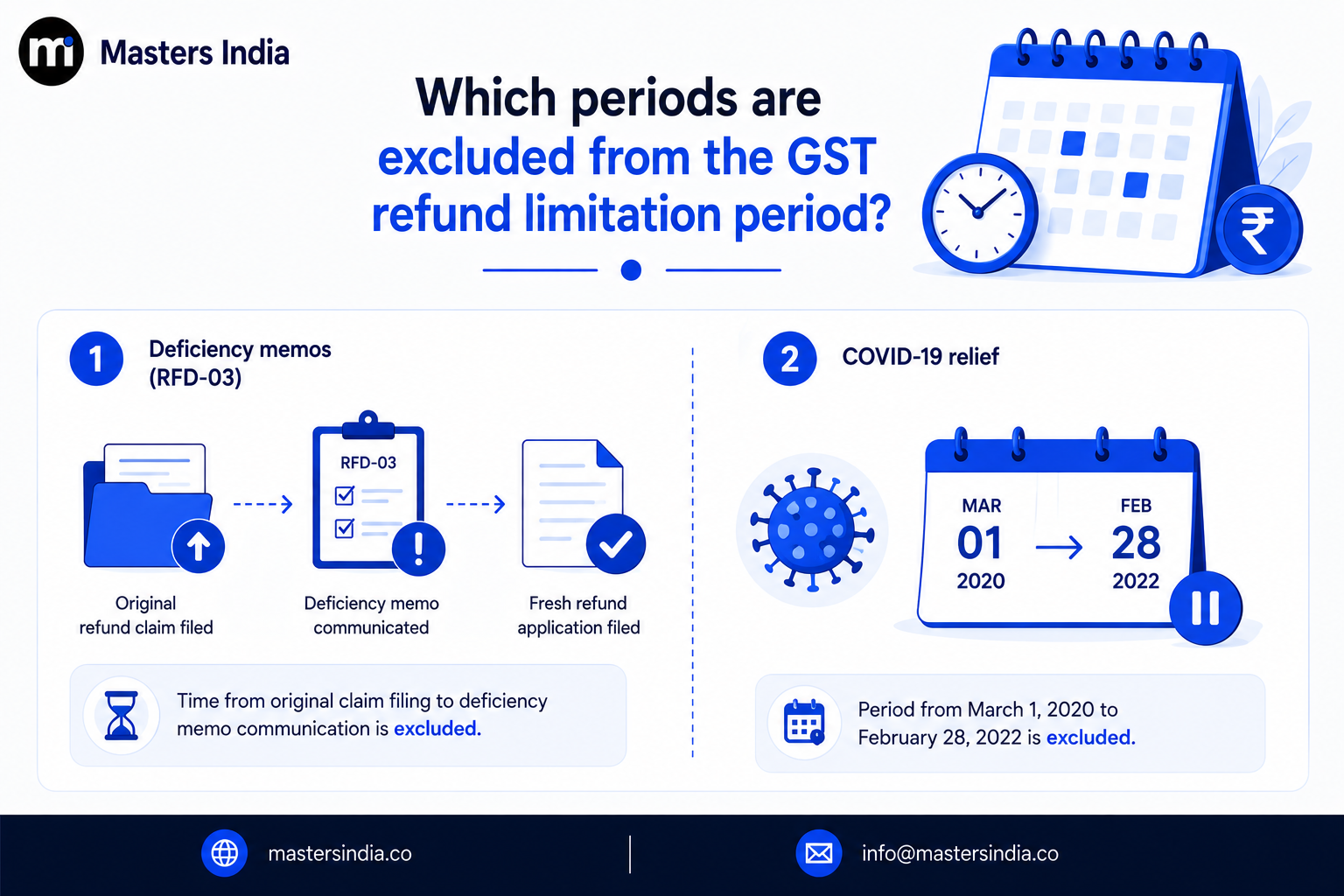 The law provides specific periods that are paused or excluded when calculating the two-year limitation:
- Deficiency memos (RFD-03): If your refund application results in a deficiency memo, you must file a fresh application. The time period from the date of filing the original claim to the date the deficiency memo was communicated is excluded from the two-year limitation calculation.
- COVID-19 relief: The period from March 1, 2020, to February 28, 2022, is excluded from the computation of the period of limitation for filing any refund application under Section 54.
When does the two-year GST refund limitation not apply?
In certain circumstances, the two-year statutory limitation does not apply at all:
- Electronic cash ledger: The two-year time limit does not apply to claims for the refund of excess balance lying in your electronic cash ledger.
- Payment under protest: If disputed duties or taxes are paid "under protest" during an investigation or litigation, the limitation period does not apply to the refund of those amounts once the dispute is settled.
- Non-statutory dues & pre-deposits: Judicial rulings have established that the limitation provisions apply only to statutory tax dues. The two-year limit does not apply to the refund of mandatory pre-deposits made for appeals (once won) or to amounts deposited that were later determined not to be taxes at all.
How does Section 128A affect GST refund claims?
It is important to note that if a taxpayer opts to settle a demand under the new waiver scheme (Section 128A), which waives interest and penalties for specific historical periods, no refund shall be available for any interest or penalty that the taxpayer has already paid prior to opting into the scheme.
What should taxpayers know about the GST refund limitation period?
The GST refund limitation period is generally governed by the two-year window under Section 54, but the relevant date depends on the nature of the refund claim. Exporters, SEZ suppliers, taxpayers claiming refunds under the inverted duty structure, and other applicants must therefore identify the applicable relevant date before calculating the limitation period.
The law also provides specific exclusions and exceptions, including periods covered by deficiency memos and certain claims relating to the electronic cash ledger, payments made under protest, and non-statutory dues or pre-deposits. Taxpayers should also consider the specific restrictions applicable to refund claims under Section 128A.
The practical takeaway is clear: understanding the applicable limitation period is as important as establishing the underlying refund entitlement. Maintaining proper records and tracking relevant dates can help businesses avoid otherwise preventable refund disputes. Masters India helps businesses streamline GST compliance and refund-related processes through technology-driven GST solutions and expert support.
About the Author

- ★★
- ★★
- ★★
- ★★
- ★★

Check out other Similar Posts

CFO Weekly Digest
A weekly newsletter delivering sharp insights, strategic analysis, and critical updates on business, finance, and compliance — designed exclusively for CFOs and Finance Leaders
Masters India is a GST Suvidha Provider (GSP) appointed by Goods and Services Tax Network (GSTN), a Government of India enterprise.
 Procapitus Business Park, 4th Floor, D 247/4A, Sector 63 Rd, Noida, Uttar Pradesh 201301
 info@mastersindia.co




Certified